How hologram tech may soon replace video calls

Source : Andrea Murad and Will Smale from BBC News

When Swiss watch boss, Christoph Grainger-Herr, was unable to fly to a global trade show in China because of Covid-19 restrictions, he decided to beam in Star Trek-style instead.

Mr Grainger-Herr, the chief executive of luxury brand IWC, had been due to travel to the Watches and Wonders event in Shanghai back in April.

When that became impossible, instead, he decided to joined the show as a life-size, 3D hologram. Appearing in 4K resolution, he was able to talk to, and see and hear the people who were physically attending the event.

“We beamed him from his office in Schaffhausen, Switzerland, to the event in Shanghai,” says David Nussbaum, the boss of US holograms firm Portl.

“He did his thing, chatted to other executives, and even unveiled a new watch, all in real time. And then we beamed him out again!”

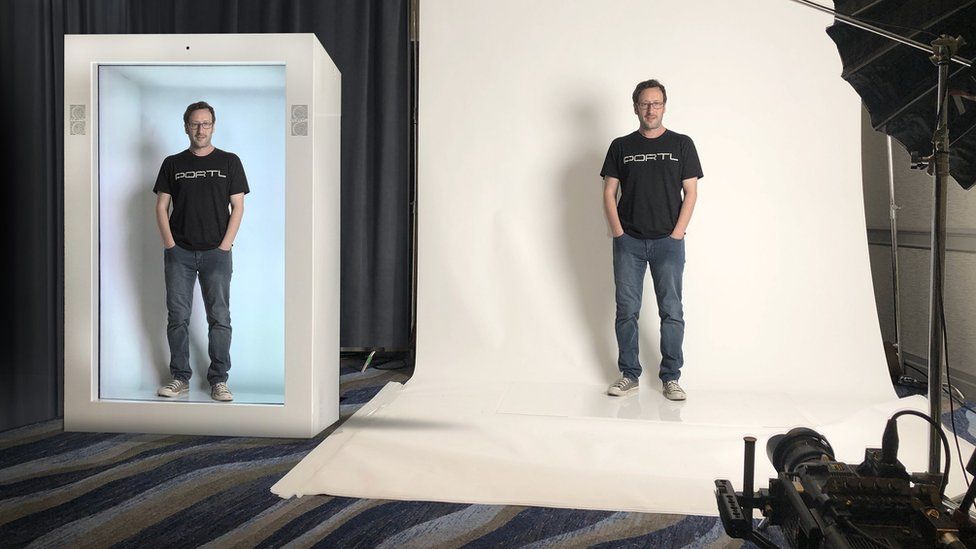
David Nussbaum, right, showing how the Portl system works, with his hologram, left

With the coronavirus pandemic having put a stop to much global travel since March 2020, it has fuelled a growing interest in the use of holograms – 3D light projections of a person – as a more life-like, more immersive, more sensory alternative to video calls.

Los-Angeles-based Portl is one of the firms at the forefront of the technology, and Mr Nussbaum says “we can’t make our portals fast enough”.

Its portals are eight feet (2.5m) tall, glass-fronted, computerised boxes. Inside the booths a life-size hologram of a person appears.

Beam me up Scotty? Actor George Takei relives his teleportation days in Star Trek

The portals have built-in speakers, so that the hologram’s ‘voice’ can be heard. They also include cameras and microphones so that the user of the hologram can see and hear the people in front of his, or her, projection.

Where the person is actually physically standing – and that can be on the other side of the world from the portal machine – he or she just needs a camera, a plain backdrop, and another set of speakers and microphones.

Portl’s app-controlled software system then connects the person via the internet to wherever the portal or portals are – and you can connect to as many as you like.

“There is almost no latency [delay],” says Mr Nussbaum. “And were it not for the sheet of glass in front of the hologram you’d think the person was actually [standing] there. In fact, if there is no light on the glass so that you cannot see it reflecting, then you do think the person is actually there.”

The Portl system is aimed at business customers, and is currently also being used by other firms such as Netflix and T-Mobile.

The portals cost from $60,000 (£45,000) each, so they are certainly expensive, although the company says they can be rented for considerably less.

“In a few years time, this is going to become a regular way of communicating between offices,” adds Mr Nussbaum.

At Microsoft, its hologram communication technology is based around a headset called HoloLens 2. At $3,500 per unit they are considerably cheaper than Portl’s system, but the 3D holograms are not lifelike.

Microsoft’s hologram system requires the users to wear headsets

Instead, when two or more headset wearers call each other, their holograms are projected in front of each of them as somewhat cartoon-like avatars, that appear to be standing in the same room.

“It would appear that they are in the same physical space, and they could walk around a virtual table and collaborate on things,” said Greg Sullivan, director of mixed reality at Microsoft.

Also aimed at business customers, German engineering group Thyssenkrupp is one firm putting the technology to practical use.

One of the world’s largest manufacturers of lifts or elevators, it used to have to fly its technicians around the world to make any necessary repairs. Now these employees can instead use HoloLens 2 headset to connect in holographic form with a local technician, guiding him or her though the work that needs doing.

Meanwhile, Japan Airlines is using the headsets to help train engine mechanics and plane crews.

Other hologram firms are more focused on the consumer market, such as San Diego-based Ikin. Next year it is launching a device that you clip to your mobile phone, and it will project into the air a transparent 3D hologram of the person you have having a video call with.

Ikin’s RYZ product will allow everyone with as smart phone to switch from video to hologram calls

Gordon Wetzstein, an associate professor of electrical engineering and computer science at Stanford University, says that holograms are a “more effective way” of communicating than video conferencing.

“[With holograms] you can create eye contact. You can read subtle cues like who’s looking at whom, ” he says.

Yet, he cautions that problems may occur in the future if these holographic images become so real that distinguishing them from an actual person will become impossible.

“If you can create digital or synthetic experiences that get closer and closer to how you perceive reality, you’re more vulnerable to being manipulated,” says Mr Wetzstein.

Back at Portl, one of the firm’s earliest investors was Tim Draper, who was also an early backer of both Skype and Tesla. Portl’s Mr Nussbaum says he is confident that hologram technology is going to replace standard video screens in video conferencing in “five years”.

He also predicts that it will see off video information screens. “We’ll replace every single digital display kiosk in every mall, in every lobby, in no time. This will be the new way that businesses will want to present their content whether live or recorded.”

South Korean dairy giant apologises for controversial advert

Source : Hyojung Kim from BBC Korea

South Korea’s biggest dairy brand has been forced to apologise over an advert depicting women as cows.

A screenshot from Seoul Milk’s controversial advert

The video by Seoul Milk shows a man secretly filming a group of women in a field, who later turn into cows.

After facing a public backlash, the company removed the promo from YouTube, but it has since gone viral after being re-uploaded by internet users.

Some also compared the man’s behaviour to “molka”, the illegal practice of secretly filming people.

“We sincerely apologise to everyone who felt uncomfortable with the milk commercial released on 29th last month,” Seoul Milk’s parent company Seoul Dairy Cooperative said in an apology posted online.

“We are accepting this matter seriously and will conduct an internal review, and take extra care to prevent similar incidents from occurring in the future. We bow our heads in apology,” it added.

The clip starts with a man with a camera wandering through the countryside.

“We finally managed to capture them on camera in a place of pristine cleanliness,” a male voice-over says.

This is then followed by the man, hidden in bushes, filming a group of women drinking from a stream and doing yoga.

When the man accidentally steps on a twig it startles the women who suddenly turn into cows.

The advert ends with the words “Clean water, organic feed, 100% pure Seoul Milk. Organic milk from an organic ranch in the pleasant nature of Cheongyang.”

Warning: Third party content may contain adverts

The advert has sparked a national debate over sexism and gender sensitivity issues but the criticism was not confined to women being depicted as cows.

Some also voiced concerns about the man surreptitiously filming the group of women, with spy cam crimes in South Korea having risen over the past few years.

Molka, which literally translates to “secret camera”, has become a particular problem for women in South Korea.

A screenshot from Seoul Milk’s controversial advert

This isn’t the first time Seoul Milk has made headlines for the wrong reasons.

In 2003, the company staged a performance in which nude models sprayed yoghurt at each other.

The head of Seoul Milk’s marketing department and the models that took part in the event were fined for obscenity.

Japanese billionaire blasts off to International Space Station

Source : BBC

Japanese entrepreneur Yusaku Maezawa has blasted off on a trip to the International Space Station (ISS), joining the growing list of billionaires who have made it to space.

He plans to carry out 100 tasks in space, including playing golf.

Mr Maezawa made his fortune through e-commerce companies including Zozotown.

He was once a drummer in a punk rock band, and last year launched a show in search of a new girlfriend to join him in space, but later cancelled it.

A Russian rocket carrying Mr Maezawa took off from the Baikonur Cosmodrome in Kazakhstan.

He is expected to spend 12 days at the ISS, and is the first space tourist to visit the station in recent years.

Japanese billionaire Yusaku Maezawa (L) blasted off with Russian cosmonaut Alexander Misurkin (C) and production assistant Yozo Hirano (R)

It is a precursor to Mr Maezawa’s much-publicised trip to the Moon in 2023.

Wednesday’s launch saw Mr Maezawa accompanied by Russian cosmonaut Alexander Misurkin and video producer Yozo Hirano, who is documenting the voyage for the billionaire’s YouTube channel.

Mr Maezawa underwent a rigorous training programme prior to the launch, which included sleeping on an inclined bed, being spun around in a chair and playing long periods of badminton – all of which he has documented on social media.

In an earlier press conference Mr Maezawa said the trip was a “dream come true”.

“People can have hopes and dreams (by seeing that) a regular person like me can go into such an unknown world,” said the billionaire.

He has promised to perform 100 tasks while on the ISS, culled from a list of suggestions contributed by the public.

It ranges from the expected, such as introducing his fellow astronauts and showing viewers what life is like on the ISS; to the more whimsical such as playing golf, blowing bubbles, and throwing a paper aeroplane.

Mr Maezawa’s voyage, which is reportedly costing him $88m (£66m), follows fellow billionaire Jeff Bezos’ short journey to space and Richard Branson’s trip to the edge of space earlier this year, in rockets built by their private companies.

Who is Yusaku Maezawa?

The Japanese entrepreneur is known for his eclectic background. The former drummer of a punk rock band founded a company called Start Today in 1998 selling rare CDs and records.

He later pivoted to fashion with e-retailer Zozotown in 2004, and became a billionaire by the time he was in his mid-30s.

Forbes magazine lists him as Japan’s 30th richest man, with an estimated personal wealth of $1.9bn (£1.43bn).

Mr Maezawa’s passion for space travel has been well-documented in recent years.

He made international news in 2019 when he was revealed to be the first private passenger slated to be flown around the Moon by SpaceX, the company owned by fellow billionaire Elon Musk.

That flight, called dearMoon, is scheduled to happen in 2023. Mr Maezawa announced in March that he would bring eight members of the public along with him and foot the cost of the entire journey.

Last year, he also launched a documentary search for a new girlfriend to join him on the trip, before cancelling due to “mixed feelings”.

He has also attracted controversy for holding multiple cash giveaways on Twitter, and in 2019 one of his posts became the most retweeted tweet at that time after promising financial incentives. Mr Maezawa has said he will conduct another giveaway from space on his latest trip.

Why is Russia sending him to space?

On Wednesday Mr Maezawa travelled to space in a Russian Soyuz rocket, and is the first self-funded space tourist to travel to the ISS in more than a decade.

For many years the only way to reach the ISS was to travel on a Soyuz capsule, and Russia has a track record of sending space tourists to the station in the 2000s including US millionaire Dennis Tito, the first non-astronaut to go into space.

It suspended its private space programme in 2010.

But with the idea of space tourism gaining pace, in part stoked by companies such as SpaceX, it has started allowing paying customers like Mr Maezawa on its launches again.

Russia also sent film director Klim Shipenko and actor Yulia Peresild to the station in October, who filmed scenes for an upcoming movie.

A revival of Russian space tourism?

Analysis by Olga Ivshina and Kateryna Khinkulova, BBC Russian

In the West the likes of Richard Branson, Elon Musk and Jeff Bezos have been working on developing a separate sector of space exploration which is purely for entertainment of rich clients,

But Russia has not worked out a way of separating the tourists from the professional cosmonauts. When a tourist goes into space on a Russian ticket, they have to be physically and, to some extent, technically, as well prepared as professional astronauts, and go up as a team with space crew.

This requires much more time, money and other resources. It has left the system open to criticism that the tourists are taking up valuable space which should be reserved for the professionals only.

Yet, what Russia is offering to tourists is arguably a much realer space experience.

Western commercial space flights are barely breaking the line between the Earth atmosphere and outer space, known as the Karman line, at the altitude of 100 km above sea level. These trips allow the crew to experience zero gravity, enjoy impressive views, then quickly return to Earth. A trip lasts 10-15 minutes and does not require complicated training.

In Russia, the system is much more rigid – if a tourist goes into space, they have to stay for a minimum of one week. They also must be in excellent health and they spend weeks preparing for the trip at the Baikonur launch pad – as Mr Maezawa has.

Is It Ethical to Own an iPhone?

Source : David Mielach, BusinessNewsDaily Staff Writer

Recent media reports and ongoing protests over the reportedly abhorrent working conditions at factories where Apple’s iPhones are produced have left socially conscious Americans with a dilemma: Is it ethical to own an iPhone?

For many Americans, even those who support socially responsible manufacturing and business practices, their iPhones and iPads have become must-have devices for both work and personal use. Now they’re being forced to ask themselves whether they are willing to ignore strong evidence that their beloved devices are being made by mistreated and underpaid employees.

The charges of mistreatment of the workers who create Apple’s products are not new. They have, however, gained mainstream momentum during the last months. The contradiction of Apple’s $13 billion in profits in the fourth quarter of 2011 juxtaposed against images and stories of worker rights violations have painted a less than shining portrait of the tech giant.

According to a Jan. 25, New York Times report, the Foxconn Technology factory, where Apple manufactures many of their products, has repeatedly been criticized for ethics violations and socially irresponsible working conditions. Violations included in the report included:

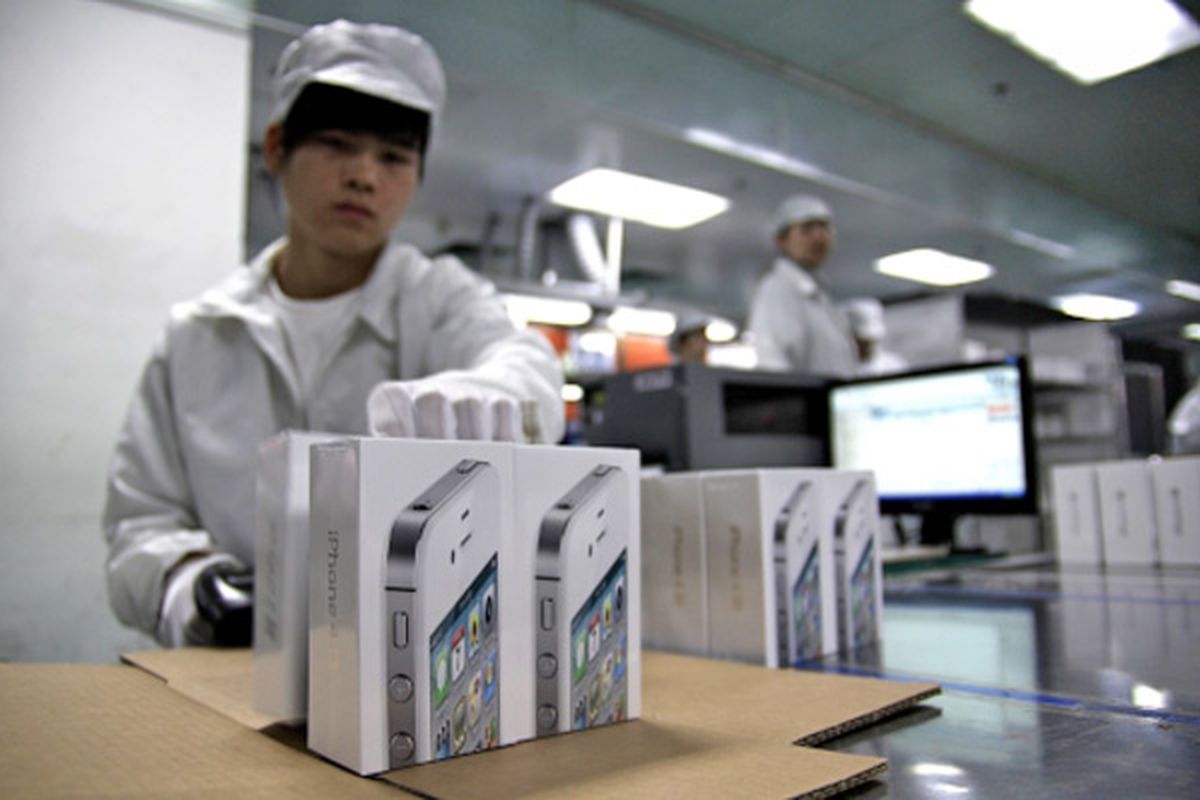
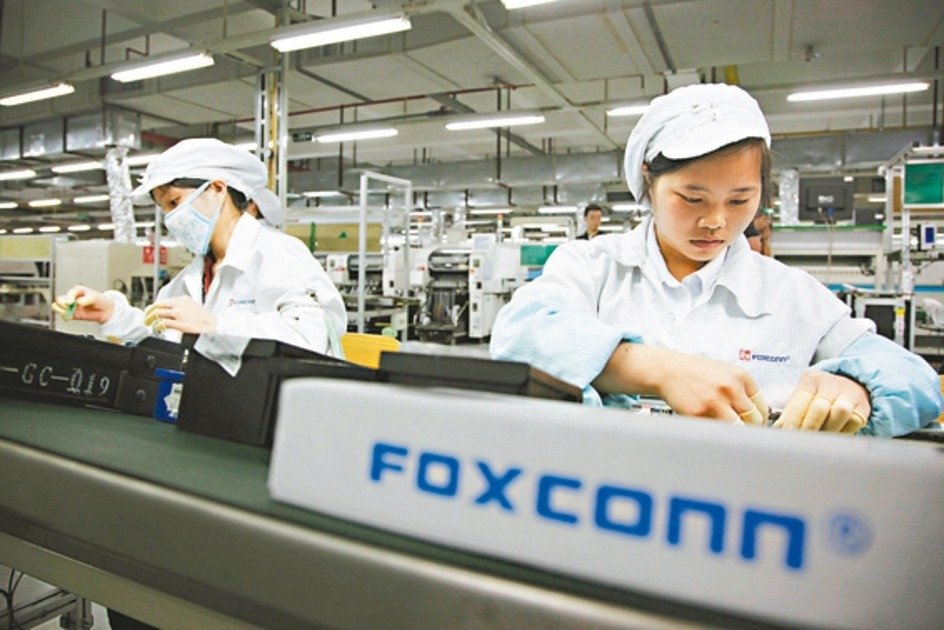
Foxconn employees who assemble the iPhones
  • Crowded dormitories where many workers were forced to live.
  • Workers forced to stand until their legs were swollen and they were unable to walk
  • Underage workers
  • Improper waste removal.
  • Wages of less than $17 to $22 a day.
  • Multiple suicide attempts by workers, including a recent instance where 150 workers threatened to jump off a roof due to a work and pay dispute.

Apple itself acknowledges the violations. It conducted 229 audits of supplier factories in 2011 and found 93 violations of exceeding the 60-hour workweek limit and a similar number of workers working six or more days a week. More information can be found at the Apple Supplier Responsibility webpage.

That does not take into account two separate explosions last year at factories producing iPads, which killed four people and injured dozens more. Another violation occurred in January 2010 at an Apple factory owned by Wintek in which 137 workers were injured when they were forced to use a known dangerous chemical, n-hexane, to clean glass screens. It was used anyway because it dissolved three times faster than rubbing alcohol, meaning that more screens could be cleaned in a day. 

These violations have prompted a strong response against Apple, including a Change.org petition that as of Feb. 1 had 154,581 signatures asking Apple to protect workers making products in factories overseas. Another petition, started on Sumofus.org, also asked Apple to make the iPhone 5 ethically.

While Apple was mentioned in many of these reports,  Apple is not the only company engaging in socially irresponsible manufacturing practices. According to the New York Times, it is estimated that 40 percent of the world’s consumer electronics are made at Foxconn factories in China, where the company employs 1.2 million people. Hewlett-Packard, Samsung and Dell are among the many other companies that use Foxconn factories to produce their products.  

The reality of the situation forces consumers to ask themselves where they stand on the issue. The question is:  If you need electronic tools and devices, such as an iPhone or laptop, to run your business and no other brands offer a socially responsible and ethical alternative, is it ethical to own these products since they are needed?

According to Janice Lawrence, director of the Business Ethics Program at the University of Nebraska-Lincoln, the answer lies with one’s personal judgment.

“Technology has blurred the line between work and home life,” Lawrence said. “For example, it allows us to receive email or phone and text messages after working hours.  In the same manner, technology has blurred business ethics and personal ethics.  This dilemma is a good example of that.”

“The advances in the functional capabilities of these electronic products make them ‘necessary’ in the workplace,” Lawrence said. “The decision to ignore the facts of the overseas production of the electronic tools is not necessarily unethical for a company using such products. Corporate social responsibility is composed of economic, legal, ethical and philanthropic responsibilities, in descending order of obligation.  Economic responsibility comes first, and these products are needed to run the business. So using them is not unethical for the company.”

While businesses may not be unethical for using these products, people need to make individual decisions based on their own personal beliefs, Lawrence said.

“In the absence of company policy addressing the ethics of vendors, the personal ethics of the user comes in play and brings with it another layer of questions to consider,” Lawrence said. “To what extent is the user personally responsible for the production – or in this case, encouraging the production – of these products?  Can the user personally accept the circumstances of the production? What are the consequences to the user of refusing to use such products?”

The question is a difficult one for iPhone users. To iPhone user Barry Weinstein, owner of Pillowcase Studies, the problem is unfortunate, but in his opinion, true change will only come from a widespread transformation of the system, not a boycott of specific manufacturers.

“The situation in China is terrible, but boycotting products that assist the local economy will have little effect on the improvement of working conditions the Chinese labor force works under,” Weinstein said. “The best we can do is work to improve the global economy so that such conditions no longer exist. By boycotting large companies, not only are the conditions still going to be bad, but many factory workers will become unemployed.”

El Salvador plans to create a ‘Bitcoin City’ and raise $1 billion via a ‘Bitcoin Bond’

Source : Arjun Kharpal from CNBC.

President of El Salvador, Nayib Bukele, gestures during his speech at the closing ceremony of the Latin Bitcoin conference (LaBitConf) at Mizata Beach, El Salvador, where he announced “Bitcoin City”, on November 20, 2021.

El Salvador plans to construct a “Bitcoin City” near a volcano that will be funded by the cryptocurrency, the country’s President Nayib Bukele announced Saturday.

The city will have residential and commercial areas, services, entertainment, restaurants and an airport and will be built near Conchagua volcano in south eastern El Salvador.

Construction will begin in 2022 and the city will have no taxes except from value added tax (VAT).

In June, El Salvador passed a law making it the first country in the world to accept bitcoin as legal tender. But not all of its population is on board with the move.

In September, thousands of people took the streets to protest against the law, fearing the introduction of the cryptocurrency could lead to instability in the central American nation.

The country has also launched a bitcoin wallet to allow citizens to use the cryptocurrency.

Separately, El Salvador plans to raise about $1 billion via a “Bitcoin Bond” in partnership with Blockstream, a digital assets infrastructure company. Half of the funds will be used to buy bitcoin, while the other $500 million will go toward energy and bitcoin mining infrastructure, the government said.

Mining is the energy-intensive process of creating new bitcoin by solving cryptographic puzzles. El Salvador said it plans to use geothermal energy from the volcano to power this.

Samson Mow, chief strategy officer at Blockstream, said that there is a five-year lock-up on the bond which is designed to take $500 million of bitcoin off the market for that period of time.

Investors in the bond will get an annual special dividend, Blockstream said.

Bitcoin has fallen about 16% from its record high of $68,990.90 which it reached earlier this month, but it is still up more than 90% this year.

The Best Receipt-Tracking Apps for Professionals

Source : Andrew Martins from Business News Daily.

Small businesses need a way to track their expenses. We’ll tell you which receipt-tracking apps they prefer.

  • Modern receipt-tracking apps help businesses track and calculate a wide range of expenses.
  • They digitize documentation and simplify reimbursement and taxation.
  • Though apps do most of the work, businesses should establish best practices to organize paperwork.
  • This article is for small business owners looking to streamline their receipt-tracking efforts with specialized apps.

Small business owners need to deal with receipts and expense reports quickly and efficiently. These affect not just your balance sheet, but other responsibilities like annual taxes. Receipt apps let you photograph and create a digital copy of your receipts. From there, you can file your receipts directly within the app. The right receipt app will keep you from losing your receipts and save you from having to dig through a pile of receipts come tax season.

Photo by Isaac Smith on Unsplash

Which receipt-tracking apps do small business owners prefer?

There are many options for receipt-tracking apps, ranging from free apps with limited features to advanced ones that require a monthly subscription. To help you determine the best solution for your business, we examined what makes a good receipt-tracking app and asked business owners which ones they prefer. [Read Related Article: Learn the Different Accounting Types]

Here are the top three solutions that small business owners told us about, and a few others you might want to consider.

Pricing: Starts at $4.99 per month

In our conversations with small business owners, the name that popped up most consistently was Expensify.

“Expensify does a great job of pre-organizing receipts, but you can organize them to your liking in the app as well,” said Tawnya Schultz, financial freedom coach at The Money Life Coach. “It does a lot of the heavy lifting for me, and it’s super simple and quick to use so I’m not up for days doing expense reports or taxes.”

The service starts at $4.99 per month for individuals and $5 per user per month for business plans. Business plans have high-powered features like automatic expense reporting and company credit card monitoring. Most of the professionals we polled considered it a worthwhile investment because of how automated it is.

“Manual entry is a thing of the past for users of Expensify because of the software’s SmartScan technology that automatically scans, inputs and tracks business expenses,” said Yaniv Masjedi, chief marketing officer at Nextiva. “However, its unique selling proposition is that it can automate any possible expense tracking as long as it’s within the software’s current capabilities, including an estimated mileage usage for your vehicle using the wonders of GPS.”

2. Rydoo is an inexpensive cloud-based option.

Pricing: Starts at $7 per user per month

Brian Patrick, home expert and CEO of Pest Strategies, said he relies on Rydoo for his company’s expense-tracking needs.

“Rydoo is the best receipt-tracking tool because it is cloud-based, inexpensive, feature-rich, has OCR scanning capabilities, and allows enterprises to limit access according to employees’ roles and responsibilities,” he said.

Plans are billed annually and start at $7 per user per month for the Team plan, which covers up to 50 active users. It’s $9 per user per month for the Growth Plan, which covers more than 50 active users. Both plans include OCR scanning, mileage expense reporting and approval flow. The Growth Latter Plan includes features like expanded expense policy rules and per diems.

[Related: Defining Accounting for Business]

3. AutoEntry simplifies receipt scanning and organization.

Pricing: Starts at $12 per month

Glen Wilde, CEO and founder of Diet to Success, said that AutoEntry more than meets his company’s receipt-tracking needs.

“I currently use AutoEntry for managing and organizing all of my receipts,” he said. “It syncs well with the most popular accounting software programs. I can scan receipts and invoices and have a digital copy in my phone in seconds. Once [it is] uploaded, the system automatically extracts the numbers and inputs it into the system. There is no manual input required. This is a huge plus because even the smallest human error can completely compromise accuracy and snowball into huge errors. It’s a major benefit for someone like me who isn’t a strong number-cruncher.”

AutoEntry uses a credit-based pricing model that’s billed as a monthly subscription. That means you pay for credits to use for invoices (one credit), bills with line items extracted (two credits), bank statements (three credits per page) and so on. Unused credits roll over to the following month. 

Plans range from the Bronze tier, which costs $12 per month for 50 credits, to the Platinum tier, which costs $98 per month and includes 500 credits.

4. Shoeboxed adds data analytics to the fold.

Pricing: Starts at $18 per month

Shoeboxed takes an all-encompassing approach to loading, organizing and using receipt data. You can send paper receipts in the mail, or you can use the phone app to upload them digitally. Either way, Shoeboxed will put them through advanced software that runs professional analytics on your receipt information.

Additionally, you can use Shoeboxed tools to catalog and organize your receipts in a way that makes sense to you. You can stick with default recommendations, or you can personalize the experience.

Shoeboxed runs on a subscription model. The lowest tier starts at $18 per month. You can add services and capacity through two more tiers, topping out at $54 per month. 

This puts Shoeboxed in a competitive price range. It’s not the cheapest service available, but still well within the realm of affordable for most businesses.

[Related Article: List of the Best Android Accounting Apps]

5. Smart Receipts puts receipt tracking in the palm of your hand.

Pricing: Free

Most receipt software packages come with a smartphone app. Smart Receipts, however, turns your phone into a mobile scanner. With the ability to create CSV reports, as well as PDFs and ZIP reports, you can organize your receipt data in the manner that works best for you. You can then load your data into expense-tracking apps, accounting reports, etc. – all from your phone.

The app is available for free at the Google Play Store and Apple App Store. Some features are behind a paywall, but all things considered, a free app that lets you digitize and track receipts has a lot of potential.

6. Wave Receipts simplifies expense tracking.

Pricing: Free

Wave Receipts, another free mobile app, focuses on a narrower range of functions than other receipt-organization tools. With Wave Receipts, you can scan receipts anywhere with your phone. With the mobile app, you can organize the data as you see fit, and the built-in tools make it easy to track expenses.

What you won’t find, though, are advanced analytics. Wave Receipts caters to startups and small businesses; the app aims to simplify expense tracking to make it more accessible, not necessarily to provide granular financial data for companies. You can pair the free app with other Wave apps, like Wave Invoicing, to create a complete software suite. Read our review of Wave Financial to learn about its free accounting software.

Why should you use a receipt-tracking app?

Over the course of a year, your small business will make many purchases, such as computers, phones, office supplies and business travel. Documenting these transactions matters for several financial and tax reasons, among other things. [Related Content: Picking the Best Invoice App for Your Business]

Careful organization of your receipts makes your life as a business owner much simpler. Here are some of the most important things you can do with a receipt-tracking app:

  • Track your transactions. With a receipt-tracking app, you can quantify how much each transaction cost, as well as any expenses your employees may have incurred. 
  • Reimburse your employees. The right receipt-tracking app can make it easier to reimburse employees for business expenses. 
  • Integrate it with accounting software. One of the biggest benefits of a receipt-tracking app is its integration with your accounting software. This simplifies transaction itemization and gives you a high-level view of where your business’s costs lie.

“The primary purpose of receipt-tracking software is to streamline budgeting and ease the burden of financial responsibility,” Masjedi said. “An intuitive and straightforward design is vital in making things easier for every professional handling money.”

Which features should you look for in receipt-tracking apps?

When choosing a receipt-tracking app for your company, you have multiple things to consider. As with most apps, features are paramount. 

However, what you value in an app may differ from other business owners’ needs. For Gian Moore, owner and editor of MellowPine, features that automate the receipt-tracking process are key.

“Receipt-tracking software should be able to organize, name, and arrange the files quickly and efficiently,” she said. “After you scan thousands of receipts, you often get confused whether you did scan it or not.”

Here are some things that many receipt-tracking solutions offer:

  • Mobile app for employees: Every receipt-tracking service we examined has an app that employees can use to scan their receipts. Available for both Android and iOS operating systems, these apps use the camera to scan a receipt and attach the corresponding photo to an expense report. Once generated, each mobile expense report goes directly to a manager or accountant for approval, which they can do on their own app. Employees can then keep track of their expense reports to see if they were approved and when to expect their reimbursement.
  • Optical character recognition (OCR): Many receipt-tracking apps have OCR technology, which pulls the data from the scanned receipt and automatically inputs it to an expense report. This makes it quick and easy to create and submit expense reports.
  • Simple data categorization: One of the biggest benefits to digitizing  your company’s receipts is the ability to dig deep into the receipt data. By using a receipt-scanning app, you can easily link receipts, invoices and expense data to certain accounts, projects or categories.
  • Easy storage: Before receipt-tracking apps, businesses had to physically store documentation onsite, either in a box or a filing cabinet. This took up space, and some inks faded over time. By digitally saving each receipt, you no longer have to store your receipts or worry about deciphering a faded receipt.
  • Support for multiple accounts: It’s not unheard of for a small business to have multiple bank accounts. Over time, sorting receipts for each of those accounts can become unwieldy. Most receipt-tracking apps have a built-in dashboard that allows you to select the account you want to attach the receipt to. These dashboards also make it easy to access all receipt-associated data for each account.
  • Compatibility with various devices: You’ll want a receipt-tracking app that’s compatible with the devices you use. Desktop computers are a natural choice, but newer software works on your mobile device through a mobile app that you can download from either the Android or iOS app store. These apps make it simple to scan a receipt – all you have to do is take a photo of it. The apps also simplify creating and submitting expense reports.

Best receipt app alternatives

Finally, what if you’re looking for a way to digitize your paper receipts but don’t want to download and use a receipt-tracking app? If this is you, consider these alternatives.

Phone camera

One alternative you can consider is simply taking photos of your receipts on your mobile phone. Then instead of uploading them to an app, you can store them in a digital filing system like Dropbox. However, the downside to this is that it’ll make it harder for you to track what these purchases were for. 

Google Drive

You can also create a Google Drive folder for your receipts. To get started, you’ll need to download the Google Drive app on your smartphone. From there, you can create a new folder labeled “Receipts.” 

From there, you’ll select “Scan,” take a photo of the receipt, and upload it to your Google Drive folder. For some business owners, this may be a simpler alternative to a receipts app.

Paperless receipts

A final option is to switch to paperless receipts wherever possible. For instance, you can greatly minimize customer receipts by using a credit card reader that works with your smartphone or tablet. From there, you can either text or email receipts to customers. 

21 Great Small Business Ideas to Start in 2021

Source : Max Freedman from Business News Daily

Looking for a great business idea? These ideas will help you start and grow a successful business in 2021.

  • Many of the best small business ideas for 2021 involve an online business model.
  • Choose a business idea that you are knowledgeable and passionate about.
  • Before starting a business, determine if there is a demand for what you want to provide.
  • This article is for anyone looking for an idea to start a business.

You know you want to start a business, but you’re having a tough time articulating your idea. If you want to become an entrepreneur, it’s important to start with a great business idea. All you need is a bit of inspiration. It all starts with an idea that has room to grow over time.

If you are thinking of starting a business in 2021, it is critical to take the new normal into account. The COVID-19 pandemic has changed so much about how people consume products and services. While starting a retail business or restaurant might have been good ideas previously, you might be best served to reconsider those thoughts until you see how the next year plays out. Instead of some more traditional businesses, think about those that can support how people are now living their lives. No matter what type of business you pursue you’ll want to create a sound business plan, but many of the ideas on this list only require a credit card processing partner to accept payments to get started.

This list of business ideas includes 21 great types of business to help you find success in 2021 and beyond. If you find an area you want to pursue, be sure to review the steps for how to start your own business.

21 great small business ideas

If you’re ready to run your own business, consider any of these great business ideas.

Photo by Kaleidico on Unsplash

1. Consultant

If you are knowledgeable and passionate about a specific topic (business, social media, marketing, human resources, leadership, communication, etc.), starting a consultant business can be a lucrative option. You can start your consulting business on your own, then grow your business and hire other consultants over time.

2. Online reseller

Those passionate about clothing and/or sales may want to consider starting an online reseller business. Although it takes a lot of time and dedication – and an eye for fashion – this is a great idea that you can start as a side hustle and turn into a full-time resale business. You can start by using online store websites like Poshmark and Mercari to sell your unwanted clothing, eventually expanding to your own resale website.

3. Online teaching

The demand for online education has opened up a wide possibility for entrepreneurs to start their own ventures. Since this is an online business idea, you can choose any subject you are knowledgeable about and teach a course regardless of your location. If you don’t have advanced knowledge in any particular subject, you can always consider teaching English as a foreign language online to students overseas.

4. Online bookkeeping

As with education, technology allows many bookkeeping services to be performed online. If you are an accountant or bookkeeper who wants the freedom and autonomy of running your own business, you can take advantage of modern technology to start your own online bookkeeping service, taking on other companies as clients.

5. Medical courier service

If you have a reliable vehicle and good time management skills, you may want to consider creating your own courier service – more specifically, a medical courier service. As a driver, you would be responsible for transporting medical items like lab specimens, prescription drugs and equipment. The healthcare industry is expanding, which is great for medical courier service job stability. You could start your courier business on your own or hire other drivers to work for you.

6. App developer

If you are knowledgeable and experienced in technology, you may want to consider a career in app development. Smartphones have become an everyday accessory for many Americans, which has increased demand for mobile apps. Similarly, virtual reality software has become popular in recent years, so there is also a demand for VR app development. 

7. Transcription service

If you have a good ear and can type quickly, a transcription service is a great business idea that allows you to work from home with a flexible schedule. Medical transcription services are especially needed as voice recognition technology proliferates for healthcare provider dictation. If you’re not looking to start all at once, or if you have a day job you would like to keep for the time being, you can accept as few or many transcription jobs as you’d like. To boost your business prospects and justify charging more, consider becoming a certified transcriptionist and delving into a few specialties.

Medical transcriptionists typically charge 6 to 14 cents per line of transcription, which can quickly add up. The typical turnaround time for transcription work is 24 hours, so it’s important to stay on top of the jobs you accept. However, the flexibility to accept only a few requests to get started means you can scale up as you are ready, making transcription an easy service to start up slowly. Best of all, there is very little startup cost and overhead. You simply need a computer, the appropriate software and a secure messaging service.

8. Professional organizer

Looking for a business idea that can really “spark joy”? Professional organizers, like Marie Kondo, help people declutter and minimize for a living. In an age of materialism, many people are desperate to downsize and take control over their possessions, rather than letting their things possess them. Minimalism is becoming extremely popular, but people often find it hard to part with things they’ve owned for a long time. Part of being a professional organizer is helping clients develop a system for downsizing and keeping things that way.

If you’re a highly organized person who enjoys making spaces functional and comfortable, you might be good at coaching others to do the same. People will pay you to help them devise a method of minimizing their possessions and then maintaining an organized space. To promote your business, ask if your clients will let you take before and after photos of the areas of their homes you’ve organized, and use those to create a portfolio that you can put on social media to attract more clients.

9. Cleaning service

If you like to clean, you can easily turn it into a business. With a few staff members, a host of cleaning supplies and transportation, you can offer cleaning services to homeowners, apartment complexes and commercial properties. Most cleaning services charge between $25 and $50 per hour. Cleaning services are straightforward businesses that require relatively little overhead; you simply need planning, dedication and marketing to get your business noticed.

If you’re looking to differentiate yourself from other cleaning services, consider adding premium options like floor waxing or exterior power washing for an additional fee. These services could be the deciding factor between your new cleaning service and seasoned companies that maintain too large a client list to provide that level of cleaning.

10. Freelance copywriter

If you’re a natural wordsmith with a bit of marketing knowledge, you can establish yourself as a freelance copywriter. Whether you write blogs, web content or press releases, plenty of companies will pay for your services. You can increase your value by bringing SEO knowledge to the table to help your clients craft a strategy to attack specific keywords that their target audience is already using in their online searches. Most freelance copywriters charge $40 to $50 per hour, but those with expertise in a given vertical could charge even more.

Freelance copywriting is a great business to run, because as long as you have an internet connection, you can work. It’s a business that you can operate from the comfort of your own home, or even from the road if you travel. If you establish a large enough network and gain referrals from satisfied clients, you could even make freelance writing your full-time job.

11. Home care service

A background in care and hospitality can go a long way to support housebound seniors who require in-home care. It’s also a service for which demand is only going to grow. According to the National Institute on Aging, between 2010 and 2050, the 85-and-over population is projected to increase 351% globally, and the global number of centenarians (those over age 100) is projected to increase tenfold. Many will need care and assistance, oftentimes in their own homes.

Luckily, you don’t need a background in healthcare to help seniors and grow a successful business at the same time, although those skills are certain to be in demand as well. Many seniors need help with everything from errands to repairs around the house. With some experience, you could consider growing your business to help seniors transition from their homes to assisted living facilities, offering services such as packing, transporting, setting up, or storing their furniture and possessions.

12. Translation service

According to research from IBISWorld, the translation services industry saw a decline in 2020, as did many industries; however, it is projected to rebound nicely in 2021. That projected growth isn’t surprising, as the internet has opened up entrepreneurs in other countries to English-speaking markets and vice versa.

This trend has created an opening for multilingual speakers to offer specific services, such as document translation and the translation of website information into languages for use in other markets. If you know multiple languages, carving out a niche in the translation services industry could be a successful endeavor.

13. Digital marketing

The importance of the internet grows with every passing day, making it harder all the time for businesses to cut through the clutter and properly market themselves. Digital marketing services are always in demand, and many small and midsize companies would rather outsource it than establish a costly in-house team. If you’ve got chops in SEO, content marketing, pay-per-click, web development or social media management, you could have a business opportunity that allows you the freedom to work from home.

Digital marketing is an important part of a brand, so it’s critical for you to respond to developments in your clients’ marketing strategies. Social media management entails watching for comments and messages around the clock, not just scheduling posts in a “set-it-and-forget-it” mindset. If you enjoy strategizing and implementing plans meticulously, digital marketing could be the right business for you. You may also consider becoming an affiliate marketer, which is another form of digital marketing.

14. Food truck

With indoor dining limited in many locations right now, aspiring restaurateurs might find more success with a food truck. Food trucks come in all shapes and sizes, serving up a wide range of snacks and cuisines. Take your favorite style of food on the road and sell your culinary passions directly to hungry customers. Sure, you’ll be working, but you’ll be in a space you’re passionate about, with a chance to connect to people who have similar interests. 

Food trucks might sound like a wild idea, but the industry is growing. The overhead and upkeep for a truck costs significantly less than owning a restaurant, and you have the added benefit of mobility. [Check out our recommendation on POS systems for your food truck.]

If you’re interested in serving up smiles, get more information in our guide to getting your food truck business rolling full speed ahead.

15. Lawn care service

If you grew up with a lawn, chances are your parents made you take care of it. For many of us, lawn care is bothersome, but for some, it offers a sense of peace and serenity. Working outdoors with your hands to tame and beautify the natural landscape can be a rewarding experience, and since so many people find the work tedious, it can also be profitable.

Lawn care services require little more than some basic equipment, a trailer and perhaps some staff, depending on how many clients you have and how big the jobs are. You can quickly grow a small lawn care service into a full landscaping company by offering premium services and establishing a reputation as a brand that does a thorough job with a smile. If you like working outdoors and creating elegant landscapes, this could be the business for you.

16. Rideshare driver

If starting your own business seems daunting or too much of a risk, you can always use your car to become a rideshare driver. The overhead and responsibility of running the company falls on the rideshare service, giving you the freedom to work as much or as little as you need. Rideshare applications such as Uber and Lyft have enabled people to start side hustles that pay well and require little more than a willingness to drive people to their destinations and make occasional friendly conversation.

Rideshare drivers have the independence of a small business owner without the heavy workload required to manage the logistics behind the scenes. If any of the other business ideas seem like they require too much effort or upfront capital, ridesharing might be a great way for you to dip your toes into the world of entrepreneurship.

17. Real estate agent

For many people, navigating the housing market is overwhelming. As a real estate agent, you can help people find the home of their dreams at a price that fits their budget. In many states, you simply need to complete a few months of classes and pass an exam to qualify as a real estate agent. Even with a certification, you’ll get nowhere without basic people skills, so if you’re not a people person, this might not be the route for you. [Read related article: How to Become a Real Estate Agent]

18. Graphic designer

Corporations, small businesses and sole proprietors all need eye-catching promotional materials, but not nearly everybody has an eye for what looks good. If you’ve got an artistic streak and know how to organize content into a visually pleasing format, you can start a graphic design business to provide flyers, digital ads, posters and other engaging visual materials. Graphic design also has the benefit of requiring few physical tools beyond a laptop and a desk.

19. T-shirt printing business

Just like with graphic design, you might enjoy launching a T-shirt printing business if you’ve got a sharp artistic sense – or maybe you just enjoy taking someone else’s visuals and screen-printing them onto a blank shirt. Either way, if you have space for a T-shirt printing setup, you can easily get the necessary tools and start your small business.

20. Dropshipping

Not all companies that sell goods store them onsite. In dropshipping, people who run e-commerce sites go to a third party to fulfill all orders. The third party is likely a wholesale retailer or other entity that runs a warehouse and shipping operation. The minimal inventory and tools needed for dropshipping make it an especially great startup idea if you’re worried about overhead and physical space.

21. Pet sitting

About two-thirds of U.S. families have a pet. When these families go away for extended periods and need someone to watch their pets for them, your pet-sitting small business can give them peace of mind. As a pet sitter, you’ll watch over your clients’ dogs, cats or other pets at their house, making sure to feed them, give them water, play with them, spend time with them, and (with dogs) walk them as needed. You’ll also need to regularly update your clients on how their pets are doing.

If you have other sources of income that require merely an internet connection and a laptop, pet sitting may be an especially apt small business idea. Almost all pet owners will be glad to let you do work on your laptop while you spend time at their home with their pets, meaning that you can run two income streams simultaneously.

What are the most successful small businesses?

Small businesses that involve website design, a subset of digital marketing, tend to be among those that make the most sales and bring in the most profit. People now learn about businesses on the internet more often than via other avenues, so finding clients and a steady income stream isn’t usually difficult. Cleaning services and real estate businesses also have high success rates, which makes sense – all people need homes, and they prefer them clean.

What would be a good small business to start?

If you’re concerned about maximizing your profit while minimizing your workload, a good small business to start might be any of the ones that most frequently prove successful. However, if you’re more interested in incorporating your passions into your work while earning enough money to live, a good small business to start is any that fulfills you, requires you to use your skills and offers you a good work-life balance. There are so many great business ideas that this question has no objectively correct answer – you know better than anyone what small business ideas will bring you happiness, success and stability.

How can I start my own business with no money?

You don’t need money to become a small business owner. The first step in starting a business with no money is to keep your current job and launch your small business as, for now, a side pursuit. Then, develop your business plan and analyze your consumer base, market, and potential challenges. Near the final stages of this planning, you’ll better understand how much money you need to start your business. You can find this money through crowdfunding platforms and investors. Consider taking out a business loan only as a last resort.

How do I start a small business from home?

Home-based businesses tend to be the most convenient and manageable small business ideas. That said, not all great business ideas are suited for home offices, so make sure your business can be conducted from home – jobs with onsite needs and heavy in-person demands might not be suitable. In your business plan and budget, be sure to incorporate any office supplies and tools that make your online business ideas feasible, such as a separate business computer, a proper desk, high-speed internet, filing cabinets and a website for your business.

What is the step-by-step process for starting a business?

Starting a business takes a lot of work, but with the right tools and guidelines, you can get your company up and running in no time. Although your specific business journey will be unique to you, we identified a few steps that entrepreneurs can take to start their business.

  1. Choose a business idea and find your niche.
  2. Analyze the current market.
  3. Create a business plan.
  4. Assess your finances and raise money as needed.
  5. Determine your legal business structure.
  6. Register your business with the government and IRS.
  7. Choose the appropriate business insurance policies.
  8. Hire employees and build your team (as needed).
  9. Choose your vendors (as needed).
  10. Market and advertise your business.

Adam Uzialko and Skye Schooley contributed to the writing and research in this article.
3 Things Most Successful Businesses Do Right

Source : Stella Marrison from Business News Daily

Most successful businesses have three basic building blocks in common.

  • Most successful businesses know how to optimize the resources available to them and understand the importance of focusing on the customers.
  • Successful companies have the organizational capability to support critical business objectives.
  • Successful businesses practice flexibility, set feasible goals and maintain authenticity.
  • This article is for business owners looking to learn what makes a company successful.

What do most successful businesses have in common?

According to a study from The Conference Board, an independent business membership and research association, high-performing organizations – regardless of industry or geography – share three similarities. This research defined these three key building blocks: 

  1. Use available resources to effectively execute business strategies. 
  2. Maintain a strong focus on the customer. 
  3. Structure the organization to support company objectives.

Let’s take a closer look at the three most successful traits, how these virtues help companies thrive, and some examples.

How the study was conducted

To better understand what traits link the best businesses, the researchers in this study identified 56 companies that rank high in leadership, financial performance and people management. Those companies include FedEx, Coca-Cola, Target and American Express. The study’s authors then surveyed 76 executives at 27 of those companies to learn how their businesses are run.

Amy Lui Abel, vice president of human capital research at The Conference Board and a co-author of the study, said that when you’re looking from the outside, it may seem as if these companies don’t have much in common.

“However, our survey of executives at those four high-performing organizations, and 23 others, revealed a layer of meaningful commonality underlying their success,” said Abel in a statement. “While the DNA of every high-performance culture is unique, they rest on a common catalog of ‘genetic’ elements that proactive leaders will identify, adapt, and incorporate into their own company’s identity.”

3 elements successful businesses share

Based on their surveys, researchers uncovered these three “DNA elements” and strategies that successful companies have in common.

1. Successful businesses use resources effectively and efficiently to execute business strategies.

High-performing organizations prioritize efficiency to best meet their goals – big and small. Specifically, they follow these best practices:

  • Create a culture of rigor and high standards for financial stability.
  • Require processes around fiscal management, oversight and decision-making.
  • Execute strategies in an operationally efficient manner.
  • Align organizational structure to support business strategy.
  • Establish and maintain a culture of accountability.

2. Successful businesses focus on the customer.

Successful companies know that customers are what make their business thrive. To that end, they prioritize customer satisfaction and ensure that their larger goals align with consumer demands. Specifically, they follow these principles:

  • Deliver high-quality products and services.
  • Create a strong client-centric culture that pays attention to customer engagement.
  • Focus the organization’s processes and products on their customers’ needs.

3. Successful companies have an organizational structure that supports critical business objectives.

Focusing all moving parts on the same goal is crucial to organizationwide success. Each individual is an important link in the chain, and everyone’s strength comes together to achieve the company’s major objectives. More specifically, the businesses surveyed in this study had these common objectives:

  • Attract and retain talent through strong brand reputation.
  • Provide learning and development opportunities to all employees.
  • Require supervisors to set clear goals and oversee performance.
  • Raise worker engagement to drive productivity.
  • Develop a global mindset among leaders.
  • Reward and recognize employees based on the company’s business strategy.
  • Help managers create effective teams.

“In today’s globalized, competitive environment, a huge array of measures – from market capitalization to employee-engagement scores – is available to evaluate a company’s success,” said Rebecca Ray, executive vice president of human capital for The Conference Board and also a co-author of the report. “But such numbers alone reveal little about how an organization succeeds, or fails, in adapting to change, developing new capabilities and executing its long-term strategy.”

What are some additional factors in business success?

In addition to the aforementioned traits, these are some common contributing factors to business success.

  • Originality:One major factor in a successful business is the ability to test original ideas. Most successful companies begin with a brilliant idea that has been tried and tested.
  • Goals:Another major contributor to success is the ability to set the right goals. This includes developing effective leaders who can help grow your business and plan strategically. You want to be able to dream big, but at the same time, realistic goals and objectives attract success. Ensure the goals are practical and achievable in both the long and short run.
  • Flexibility: In keeping with that notion, you must be flexible and know when to make certain changes that are good for your business.
  • Technology:Going digital is not only good for the environment, but can also be great for your company. Although you may not be too excited about the initial costs, going digital can save money on office supplies – such as paper, ink and filing cabinets. While it may be easier to begin your business without these initial investments, making them early can save you time and effort down the line.
  • Authenticity:Another factor in success is building an authentic brand. Customers are tired of grandiose companies that tell them whatever they want to hear to make a sale. Successful companies find ways to spread a genuine message that attracts loyal customers.
  • Financial savvy:You must have a good handle on the financial realm to prosper as a company. It doesn’t matter how good your ideas are if you don’t fully understand how to make money from them. Successful businesses are skilled at creating multiple streams of income and optimizing them over time.
  • Gratitude:Very few companies last without loyal customers and supporters, so find a way to show your patrons you appreciate their business. Some examples are giveaways, sales for frequent customers and rewards programs. Any way you can give back to your customers and show appreciation is always beneficial.
  • Fearlessness:Last but not least, being fearless is one of the top ways you can become successful. Starting a business is not for the weak. It can be tiring, tedious and downright maddening at times. Nevertheless, those who stick with it often gain unforeseen rewards. They also are often not afraid to introduce new ideas and concepts that may seem radical or even taboo, in the name of growing their business and brand.

Examples of successful companies

For the study, The Conference Board interviewed some of the world’s largest and most successful companies to glean insights on their operations. Here’s a bit about four of the companies they interviewed and how their investments resonate with consumers:

FedEx

Since its founding in 1971, Federal Express has continually delivered on its promise to get packages and important documents transported on time around the world. FedEx has built a reputation focused on the importance – and quality of – their service. As the tagline goes, “When it absolutely has to be there overnight …” FedEx has continually upheld that guarantee for five decades, building a reputation of reliability and efficiency that gets packages where they need to be.

Coca-Cola

Few names are more synonymous with the global beverage market than Coca-Cola. Aside from its trademark sweet drink – and the large family of brands it’s accumulated in the decades since – Coca-Cola has built an empire on delivering a product that customers tried and wanted. It held suppliers to those same high standards throughout the decades, ensuring that everyone works toward the same goal of delivering the quality product fans around the world expect.

Target

Target has doubled down on investing in its staff in recent years. Team members in its stores have received salary increases, and the company expanded training and professional development to help deliver the best customer experience possible. At the corporate level, the customer remains the focus, as Target delivers according to consumer feedback.

American Express

Photo by CardMapr on Unsplash

American Express has a long history as a customer-friendly credit card brand. It has attracted the most affluent clients, intrigued by the spending perks and high level of customer service they can receive. The company builds upon the trust it has earned over decades in the business, funneling that back into its offerings and attracting new customers – and keeping old ones – in the process.

Chad Brooks contributed to the writing and reporting in this article.

Fuel, housing costs boosted October’s inflation. Here’s what it means for the Fed’s stance on interest rates

Source : Patti Damm from CNBC

October’s surge in consumer prices was driven by some factors that may linger. Market pros say the Federal Reserve may be forced to move up the timeline on its ultimate inflation-fighting tool: interest rate hikes.

The consumer price index jumped 0.9% on a monthly basis, and was up 6.2% year-over-year, the fastest pace in 30 years. According to Dow Jones, economists had expected a 5.9% gain. Excluding food and energy, the increase was still high, up 0.6% or 4.6% year-over-year.

CPI measures inflation based on a basket of products from rents and groceries to gasoline and medical services. After the October report Wednesday, Treasury yields rose and markets began to price in more aggressive Fed tightening, or interest rate hikes.

The fed funds futures market showed that traders have placed higher odds on the central bank to start raising rates by July, rather than September. Traders expect another hike by next December and at least three more in 2023.

“The real risk is they’re going to move faster than September… and the market is pricing in a faster move. And until today, we actually thought the market was ahead of itself,” said Michael Englund, chief economist at Action Economics.

“If you get a few more numbers like this, not only is inflation not slowing, it’s accelerating,” he added. “If it continues to gain steam, there may be more of a panic in the first quarter, given what happens in December, January and February. We already know we’re going to have big price gains in November, given what we’ve seen in gas prices.”

But Englund said the Fed is likely to be more dovish next year. Fed Chairman Jerome Powell’s term expires early next year. Even if he is not renominated, his possible replacement, Fed Governor Lael Brainard, is viewed as a dove.

“We continue to think they’ll try to hold the line as long as they can,” said Englund.

Economists said the inflation has become broader, and therefore risks are becoming more persistent.

Diane Swonk, chief economist at Grant Thornton, said she does not expect inflation to peak until early next year.

“I still think we’ll be cresting out in the first quarter. It’s going to get worse before it gets better. The comps don’t play out until the spring,” she said. “It’s not a pretty picture right now.”

Some factors, like semiconductor shortages, could fade. But that one in particular is clearly showing up in car prices, as the lack of chips has made it impossible for car makers to keep up with demand.

Used vehicle prices again were a big contributor to CPI, up 2.5% over September, and 26.4% year over year. New vehicle prices rose 1.4% on a monthly basis and 9.8% over the last 12 months.

Swonk says higher inflation could push the Fed to speed up the tapering of its $120 billion a month bond-buying program. That would clear the central bank to move faster to raise rates next year.

Boiling oil

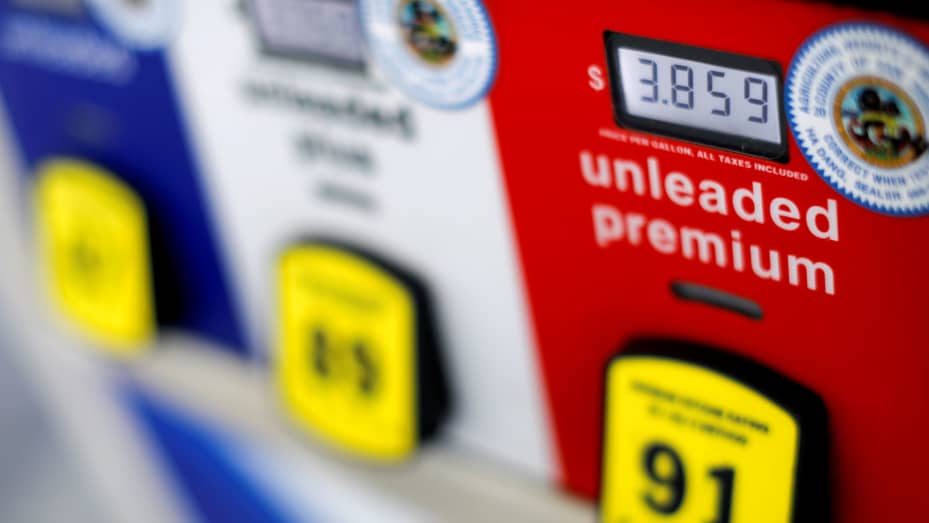
Gasoline is one of those areas that could be hotter-than-expected and for longer periods. Consumers are feeling the pinch of higher fuel costs all across the country. Nationally, a gallon of regular unleaded was $3.41 Wednesday, $1.30 more than a year earlier, according to AAA.

Francisco Blanch, head of global commodities and derivatives strategy at Bank of America, said oil could reach $120 a barrel by next year. On Wednesday, a barrel of West Texas Intermediate crude settled at $81.34.

Fuel oil prices rose 12.3% in October and are up 59.1% over the past year, according to the CPI report. Energy prices overall rose 4.8% in October and are up 30% for the 12-month period.

“I think we are in a bit of a world of contradictions, and oil is in the bullseye of many of the contradictions,” said Blanch. “Oil has been the biggest laggard in the energy space. Every single commodity has been skyrocketing for the last 18 months, and oil is back to $80.”

Blanch said demand could continue to push the price higher, and users of natural gas have been substituting oil as prices of that commodity rise.

“The thing with oil is we are about to experience a big resurgence in international travel,” he said. International flights are just beginning to rebound, and demand for oil is about to increase as airlines buy more jet fuel.

“It could be 1.5 million to 2 million barrels [more demand] by the middle of next year,” Blanch said. But then he expects prices to begin to move lower in 2023. “I think at some point we start to slow down demand,” he added.

Swonk said Hurricane Ida, which shut in some U.S. oil and gas production for weeks, affected the price as well. “Clearly Hurricane Ida made it worse. There’s also a lot of other things going on here: Covid, climate change, demand surge,” she said.

Paying the rent

Another area that is likely to get even hotter is shelter costs, about a third of CPI and so far relatively muted.

JPMorgan economist Daniel Silver notes there were large jumps in the main rent measures, and industry data suggest there could be even more increases.

“Tenants’ rent increased 0.42% in October, slightly softer than the September increase but still one of the firmest changes in recent decades,” he wrote. “Owners’ equivalent rent, meanwhile, jumped 0.44% in October, a touch above the September gain and the largest monthly increase since 2006.”

National median rents are up 16.4% since the beginning of the year, according to Apartment List.

Swonk said housing has not returned to its pre-Covid level yet. “Housing could add over a half percent to overall inflation next year and even more to the core. It’s a third of the total CPI, but it’s even bigger on the core,” she said.

Wage spiral

Workers wages have been gaining at a rapid clip this year, but not as much as inflation. Economists said they expect more wage increases to come, which tend to be sticky — that is, a cost that doesn’t easily abate for employers.

It is also an area that can become locked into the rising costs of other essentials, like housing.

Average hourly wages were up 0.4% in October, nowhere near the 0.9% jump in inflation.

“It’s not a wage price spiral like the 1970s or 1960s, but you could go through a period in time where you have a temporary wage price spiral, which gives this more longevity than we would like,” Swonk said.

Big business bosses are warning that supply chain issues and inflation are here to stay

Source : CNBC.com

LONDON — Top executives at multiple European blue-chip companies have told CNBC that supply chain problems, labor shortages and inflationary pressures will run for longer than policymakers are expecting.

The most recent inflation prints have done little to assuage concerns about stickier inflation. The U.S. consumer price index jumped 6.2% in October from a year ago, official figures revealed on Wednesday, the sharpest annual rise for 30 years and vastly outstripping the U.S. Federal Reserve’s target.

A truck picks up a shipping container at the Port of Savannah in Georgia. The supply chain crisis has created a backlog of nearly 80,000 shipping containers at this port, the third-largest container port in the United States, with around 20 ships anchored off the Atlantic coast, waiting to offload their cargo.
Paul Hennessy | LightRocket | Getty Images

Chinese producer price index inflation surged 13.5% annually in October, while U.S. PPI grew at 8.6% annually, equaling an all-time record.

Companies around the world are battling supply chain bottlenecks as a post-pandemic spike in demand converges with industrial production struggling to catch up after lengthy Covid-induced shutdowns.

Ahold Delhaize Chief Financial Officer Natalie Knight told CNBC Wednesday that although she was confident of the Belgian-Dutch grocer’s strategy to deal with such pressures, they showed no sign of abating.

“I think what we are definitely seeing is inflation is picking up, but what I would also say is when you look at food, it is a smaller share of wallet than some other categories, and we definitely see other areas where inflation looks a lot higher than in our industry,” Knight said.

Knight suggested rising consumer prices will continue through the fourth quarter. She said Ahold Delhaize was working to ensure price increases were not passed on to customers.

“We’re working with the vendors, we’re working with economists making sure we’ve got the right ‘should cost’ models, so that we’re able to really only accept the prices that are absolutely necessary,” she added.

On labor, Knight said the company had noticed a divergence between a robust supply in Europe, which had normalized to around pre-Covid levels, and the U.S., where there are “bumps in the road” with regards to recruitment. She also said there were certain “pressure points” across the labor market, particularly in transportation and distribution.

“I think our vacancy rates are pretty consistent, but we are working a lot harder to keep them that way,” Knight added.

Policymakers across major central banks have largely held the line that the period of high inflation in their respective economies, and the global supply problems feeding into it, are “transitory.” However, many companies have warned of increased cost pressures in their third-quarter earnings reports in recent weeks.

Managing supply problems a ‘core competence’

Supply chain woes have been exacerbated in different parts of the world by various geopolitical factors. For instance, power shortages in China have affected production in recent months, while in the U.K., Brexit has been a big contributor to a shortage of truck drivers and agricultural workers.

However, concerns over the persistence of these problems were echoed by Siemens Energy CEO Christian Bruch, who told CNBC Wednesday that the industrial world is going to be dealing with this “for quite some time.”

“It is going to be way into 2022 and honestly, my belief is managing the supply chain will be something which will be with us for [a long time],” he said.

“It will be a really core competence of companies like us, making sure that you can manage these scarcities and issues on the supply chain, not only on the material but also on the logistics side.”

Bruch said the energy industry in particular would need to improve its management of shortages, given the increased demand for raw materials needed for the promised transition toward renewables.

‘Once in two-decade inflationary pressure’

In the U.K., inflation slowed unexpectedly to an annual 3.1% in September, but analysts expect this to be a brief respite after August’s 3.2% climb was the steepest since records began in 1997.

The Bank of England expects consumer price inflation to top out at 5% before moderating toward the end of 2022 and into 2023, but Standard Chartered CEO Bill Winters recently told CNBC that his bank’s recent experience points to higher inflation becoming structural.

“I see wage pressure pretty much everywhere we go, we see labor shortages, and of course there’s friction costs, that should iron themselves out over time, there’s energy prices, which I think are going to remain high for quite some time because economic activity is strong,” Winters said.

“That to me says that inflation expectations are becoming ingrained.”

Following Unilever’s results in late October, CEO Alan Jope said the British consumer goods giant was witnessing “once in two-decade inflationary pressure.”

“We are seeing commodity inflation across really every type of input cost that we have — agricultural commodities, petrochemical commodities, paper and board, transport, logistics, energy, labor — all are moving in an upward direction,” he said.

“Our first reflex is to fire up our productivity programs and try to save as much money as we can and avoid taking price, however this is once in two-decade inflationary pressure and so we have raised prices.”