Sri Lanka plans to settle a debt for past oil imports from Iran by paying it off in tea, a government minister said.
Ramesh Pathirana said his country hoped to send $5m (£3.8m) worth of tea to Iran each month to clear a $251m debt.
Sri Lanka is experiencing a severe debt and foreign exchange crisis, which has been made worse by the loss of tourist income during the coronavirus pandemic.
A member of the country’s tea board said it was the first time tea had been bartered to settle foreign debt.
Mr Pathirana said the method of payment would not violate United Nations or American sanctions, because tea was categorised as a food item on humanitarian grounds, and no black-listed Iranian banks would be involved.
“We hope to send $5m worth of tea each month to repay Iran for oil purchases pending since the last four years,” he told Reuters
The Plantation Ministry said: “The recommended scheme will save Sri Lanka much-needed foreign currency since the settlement to Iran would be made in Sri Lankan rupees through the sale of Ceylon Tea.”
But a spokesperson for the Planters’ Association of Ceylon, which includes all the major plantation companies in Sri Lanka, said this mode of transaction was a “[sticking] plaster solution by the government”.
“It doesn’t necessarily benefit exporters as we will be paid in rupees, circumventing the free market, and provides no real value to us,” added Roshan Rajadurai.
Sri Lanka is reported to have to meet about $4.5bn in debt repayments next year, starting with a $500m international sovereign bond repayment in January.
However, the country’s foreign reserves dwindled to $1.6bn at the end of November, latest data from the central bank showed.
Central Bank Governor Ajith Nivard Cabraal said earlier this month that Sri Lanka is confident of being able to “seamlessly” repay all sovereign debt that comes due in 2022.
Sri Lanka produces about 340m kg of tea annually. Last year it exported 265.5 million kg, with earnings of $1.24bn in 2020.
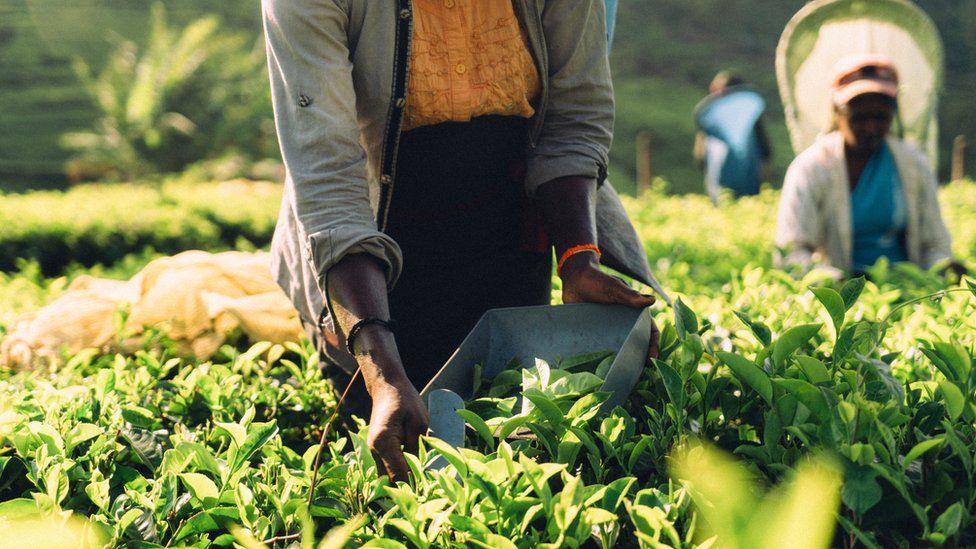
Almost 5% of the population of Sri Lanka work in the billion-dollar industry, picking leaves on the mountain slopes and processing the tea in plantation factories.
US microchip maker Intel has apologised following a backlash over its letter urging suppliers not to source products or labour from China’s Xinjiang region.
The company’s letter sparked criticism in China, with calls for a boycott.
The letter said Intel had been “required to ensure” its supply chain did not use labour or source goods from Xinjiang, following restrictions imposed by “multiple governments”.
China has been accused of human rights abuses in Xinjiang.
The region is home to many of country’s Muslim Uyghur population and there have been allegations of forced labour and possibly genocide.
In a Chinese-language statement on its official WeChat and Weibo accounts, Intel said that its commitment to avoid supply chains from Xinjiang was an expression of compliance with US law, rather than a statement of its position on the issue.
“We apologise for the trouble caused to our respected Chinese customers, partners and the public. Intel is committed to becoming a trusted technology partner and accelerating joint development with China,” the firm said.
The White House said President Joe Biden signed into a law a bill that requires companies to prove that goods imported from China’s Xinjiang region have not been produced with forced labour.
The bill was passed by Congress last week with the aim of stopping US companies from benefitting from forced labour, something which China denies is the case.
Many Weibo users derided Intel’s apology as an attempt at protecting sales in China, with one saying: “A mistake is a mistake! Retract the statement about Xinjiang!”
Meanwhile, the hashtag “Is Intel’s apology sincere?” was trending on Weibo on Thursday, Reuters reported.
Singer Karry Wang said he would no longer serve as brand ambassador for Intel, adding in a statement that “national interests exceed everything”.
Intel is not the first company to come under pressure over aims to comply with sanctions related to Xinjiang while continuing to operate in China.
‘Sensitive issue’
Retail giants Nike and H&M faced a backlash earlier this year after they expressed concern about the alleged use of Uyghur forced labour in cotton production.
Intel, which has 10,000 employees in China, said in its apology that it respected “the sensitivity of the issue in China”.
Meanwhile, China’s foreign ministry said “accusations of forced labour in Xinjiang are lies concocted by anti-China American forces” aimed at destabilising China and hindering its development.
“We note the statement and hope the relevant company will respect facts and tell right from wrong,” said foreign ministry spokesman Zhao Lijian.
Source : Kitti Palmai and Will Smale from BBC News.
If you are dreading having to cook your family’s Christmas Day dinner then you are definitely not alone.
But for future Christmases there is now a new alternative – get a robot chef to do everything.
A number of tech firms are now developing robots that can cook and plate up entire meals, both for commercial and domestic kitchens.
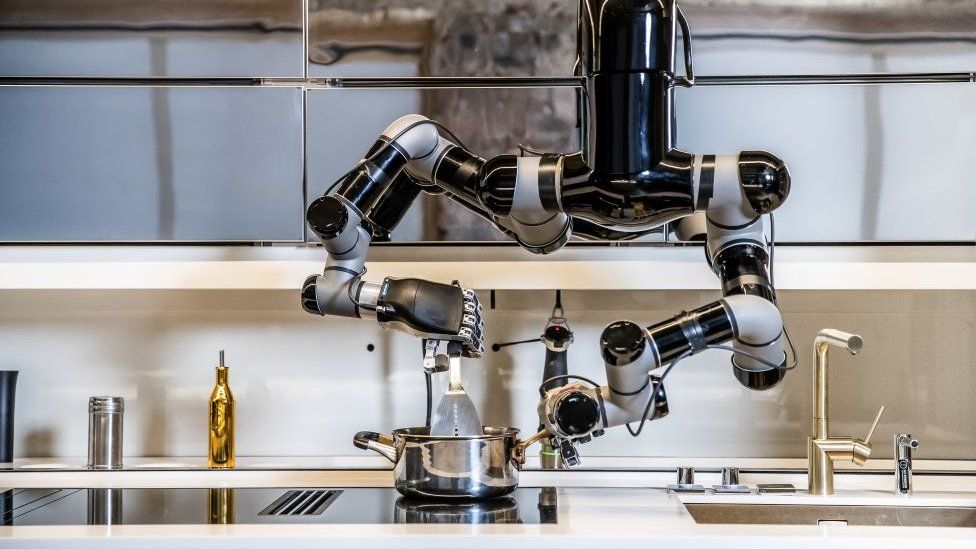
One of those at the forefront is London-based Moley Robotics, which is due to release its product, the Moley Robotic Kitchen, next year.
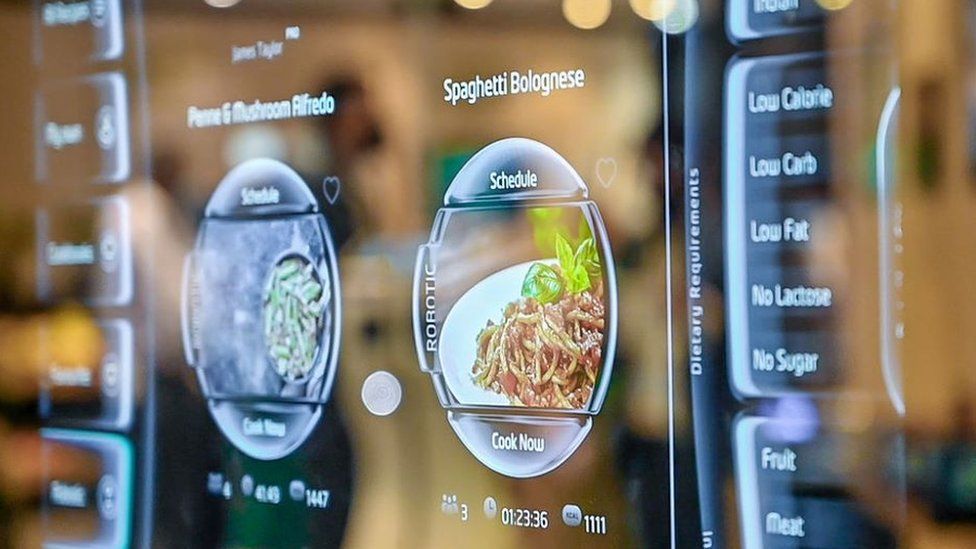
Attached to rails fitted to the ceiling, two robotic arms hang down over your oven and hob, and can cook more than 5,000 different recipes. You just pick the dish in question on a touch screen, add the ingredients it tells you to the built-in containers, and it does everything else.
It can turn on the oven and hob, pick up and put down saucepans and spatulas, stir, whisk and flip.
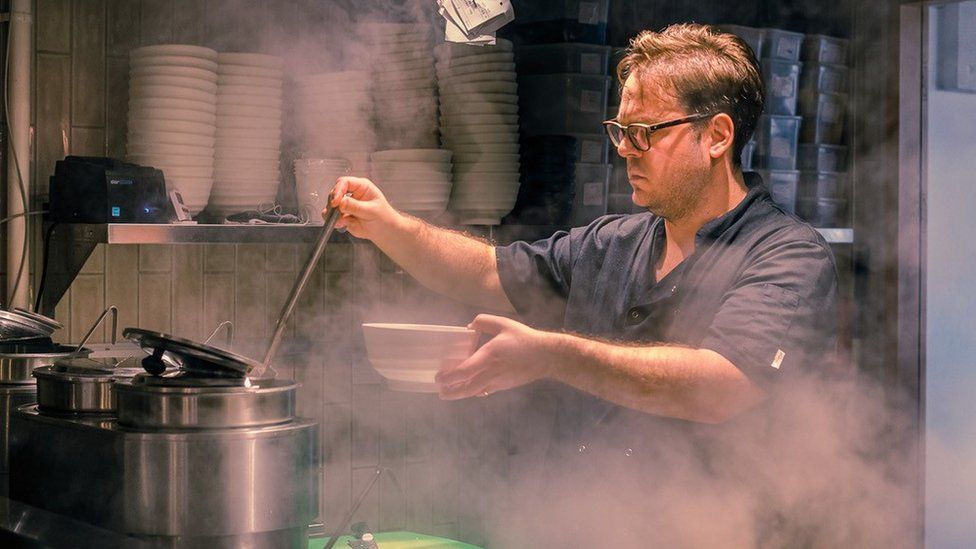
To help develop the robot, Moley employed the services of professional chef Tim Anderson, who back in 2011 won the BBC’s MasterChef TV competition.
He explains how he would make dishes, and the robot would be programed to copy his movement.
“I would cook through the recipe in a kitchen with a layout to that of the Moley kitchen, and my movements would be recorded, and then transferred onto the robotic hands and arms,” says Mr Anderson.
“Those movements would then be streamlined by the robotics team, and in the end, we wound up with a consistent program that would produce the same dish every time.”
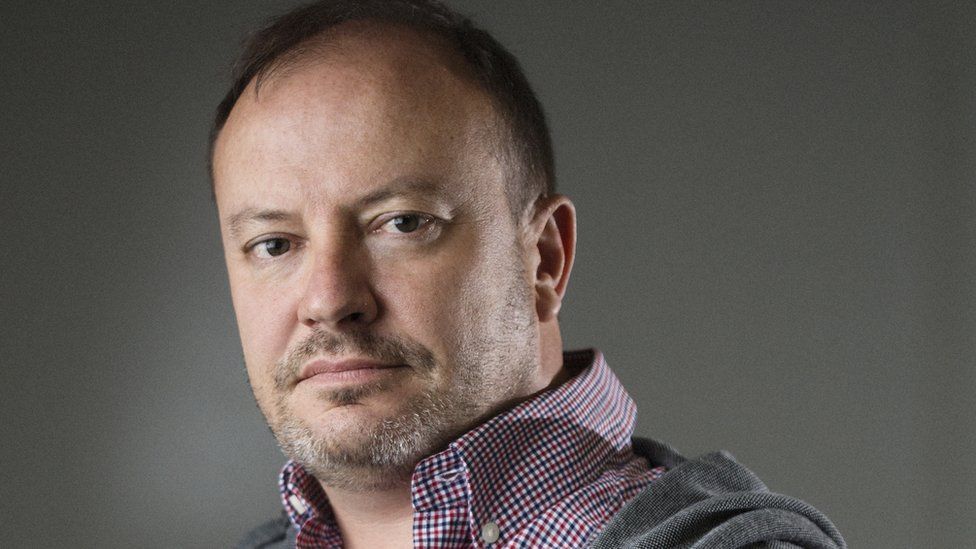
The developers of the Moley Robotic Kitchen copied the movements of chef Tim Anderson, pictured
Moley’s chief executive Mark Oleynik says the system operates behind a glass screen so that the robotic arms cannot knock into a human.
“As an additional measure, we have safety radar systems able to detect any unwanted impacts between the robot and any surface and immediately stop the operation, thus mitigating any such risks altogether.”
Mr Oleynik adds that the robot chef could indeed help you make your Christmas Day meal. But for any home cook wishing to rush to place an order, there is currently a significant problem – the cost.
The minimum price of a Moley Robotic Kitchen is £150,000. Other similarly expensive kitchen robot systems are being developed by Israel’s Kitchen Robotics, and US firm Dexai Robotics.
Yet the price of such systems is likely to drop, says Julia Segal, senior strategist at US food consultancy The Culinary Edge: “Many of these technologies start well out of reach of the average home cook. However, as the technologies continue to proliferate, costs will eventually come down.”
One restaurant group that already uses a robot for all its cooking is French pizza mini-chain Pazzi.
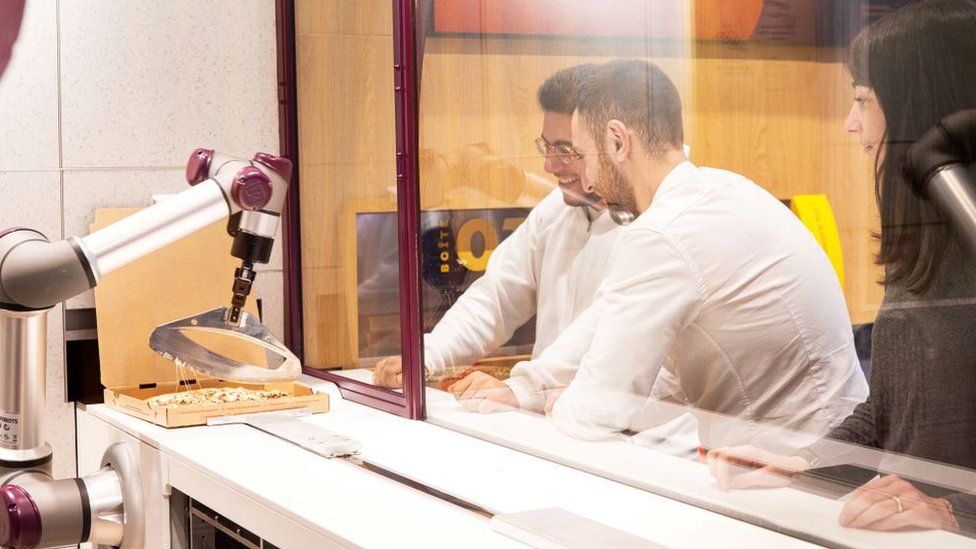
The business is owned by two robotic engineering students, who designed their own pizza-making robot and then opened their first branch in Paris in 2019. They now have a second outlet in the French capital and another in Brussels.
Pazzi now has three restaurants where its robots do all the pizza-making and cooking
Once an order is received, the robot in each location completes the full process – pressing the dough, adding the sauce, putting on the chosen toppings, cooking the pizza, placing it in the takeaway box, slicing it into pieces, and handing it to the customer. This is said to take just five minutes per pizza.
Co-founder and chief executive Philippe Goldman says the robots have been programed to maintain top quality control. “When the robot presses the dough, if it detects some holes in the dough, it’s going to reject it, put it in the trash and make a new one.”
While the kitchen is fully autonomous when the restaurants are open, Pazzi does have human employees. These prepare the ingredients and load the robots in the morning, and then welcome and host customers.
Mr Goldman adds that Pazzi has now received more than 1,000 enquires about its robots, including “a lot coming from Italy”, plus from the UK, US and Germany.
Mikaela Pisani Leal is a data scientist and expert in machine learning at Rootstrap, a technology sector management consultancy.
She says robot chefs offer restaurants a host of benefits. “These robots could reduce viruses in food, improve and maintain cleanliness and hygiene… they could turn the industry on its head.”
But she also cautions they could result “in job losses, and people having to reinvent themselves”.
Moley’s system comes with a touch-screen and recommended recipes
Wesley Smalley, the owner and head chef of Seasonality, a fine dining restaurant in the Berkshire town of Maidenhead, says that while kitchen robots offer convenience, they won’t be of interest to the higher end of the market.
“I don’t believe a robot can replace a human touch, especially when it comes to quality restaurants and pubs,” he says. “The changes and variations of produce would not allow a robot to adjust or change a recipe according to their flavour characteristics.
“A human chef brings a natural passion and connection to the provenance of ingredients which fundamentally shows in the creation and execution of menus.
“I do however accept that robotics will help with the efficiency and consistency of menial jobs, but let’s not forget that someone will still need to program it and stock it with produce.”
Yet for many of us due to reluctantly do the cooking at home on Christmas Day, kitchen robots are a tempting thought.
Your mom and I are so very much looking forward to celebrating the holidays with you — and especially with the newest member of our family! We’re so glad you’re all safe and that Valeria had a good pregnancy and got herself protected by taking a vaccine (and soon a booster) early.
We know you’re worried also for the kids, who are facing a difficult situation in school. They now have to wear masks and are asked to get vaccinated even when they run a lower risk of getting sick themselves. You told me how even some of your friends reacted extremely to that news.
They might even like wearing a mask if you frame it right. They get to do what adults are doing and do their part in helping people from getting sick. My experience is that if you put a positive spin on it and ask them for their opinion, they’re often more willing to be “courageous” than you might think.
As for our newly born granddaughter who’s barely a month old: You’re already through the most critical phase as Valeria got vaccinated during her pregnancy and with that protected herself and the baby. Even now as she breastfeeds, she passes on antibodies that help the baby protect herself.
Sadly, the Omicron “variant” of the COVID-19 virus is spreading all over the world now. And I know that you’re wondering: What should we expect? Is this going to be the first wave all over again or will we be better off?
My assessment is: This may be the most contagious variant yet, with a possible tsunami of infections and sadly little effect of the vaccines on that front. We therefore are better safe than sorry and should do everything we can to protect ourselves and those around us.
Here’s what I think you should know:
First, this Omicron “variant” is a new form of the COVID-19 virus, which causes a new wave of infections because it’s somehow more potent than the previous variant. Omicron is both more contagious than previous variants (Alpha, Beta, Gamma, Delta) and also escapes from the “immunity” the antibodies induced from the previous variants.
Omicron can infect people who have already been infected with previous variants and even those who were vaccinated several months ago. Moreover, Omicron is equally “pathogenic” as previous variants — i.e., it can cause serious disease leading to hospitalization, intense care, or even death.
As you know, our healthcare systems are currently still over-burdened by COVID-19 patients in hospitals and intensive-care wards. I hear that’s the case for our local hospital and also for the one in Geneva. As a result, seriously ill people without COVID-19 but with cancer or other life-threatening conditions often have to wait for treatment.
That delay of necessary care for non-COVID-19 patients also causes unnecessary fear, suffering, and premature death. The “Delta wave” is now receding, but the “Omicron wave” is already unfolding with the overload of hospitals with COVID-19 patients and delays for non-COVID-19 care. You may have heard Dr. Anthony Fauci is predicting the same in the US.
(I have known of Dr. Fauci since I was researching HIV in the 1980s. He’s an incredible scientist with a résumé in infectious diseases that’s equal to none. When he speaks, we should all listen.)
So what can we do together to avoid or certainly reduce the Omicron wave?
Omicron remains sensitive to the vaccine, but less than Delta. That’s why you need a third dose of the vaccine to help protect you from serious illness and hospitalization.
Unfortunately, even three doses don’t protect against the infection itself. If you’ve been vaccinated three times and still become infected, you’ll often hardly notice it: You may have a “common cold,” a sore throat, and sometimes a fever. So I know you’re all lining up for your boosters and you’re doing the right thing.
Sometimes you don’t feel anything at all and yet the virus is in your body for a few days and can be transmitted to other people. If you then infect someone who hasn’t been vaccinated or who is vaccinated but is weakened, that person can become seriously ill with COVID-19. Not only very frail or old people are sensitive, but also middle-aged people with obesity, high blood pressure, chronic bronchitis, and diabetes, and even some apparently perfectly healthy youngsters or even children.
A third shot of the vaccine is therefore important to protect yourself against disease. But even if you get a third shot, you can still transmit the Omicron virus and possibly make someone else ill. That’s why we should all stick to the measures below because we know they greatly reduce the spread of each variant of the virus:
Keep your distance and wear a face mask correctly when you’re indoors with people who don’t belong to your core family: at school, in the office, in a shop, on the public transport, in the town hall, and so on.
Constantly ventilate rooms where you’re together with many people with fresh air. You can do so by opening a window at home or by installing an air purifier (they’re sold online and in many shops).
Wash your hands regularly.
Definitely don’t cough or sneeze in front of others, and make sure to keep your mask on when you speak. Sneezing, coughing, or speaking loudly to someone are the three most likely ways in which virus particles can spread and infect others.
If any of you have had close contact with an infected person, the rules of testing and quarantine (isolating yourself for one to two weeks) absolutely apply. That’s also the case if any of the kids or your partners are infected. I know you’ll have a lot of social contacts, so please be careful and follow those best practices.
As we will soon see each other for the holidays, it’s not always possible to strictly follow all these rules. For example, if we’re going to eat and drink together, you can’t always wear your face mask and socially distance if you’re in a small room.
Then it’s really recommended that all people who plan to come together (including the children) do a self-test beforehand to make sure that no one would unknowingly become infected with the virus and spread it. This is very important if there are people who are old or weak — then everyone should certainly be tested.
(Your mom and I don’t consider ourselves old and weak, but we’re now in our late sixties and early seventies, so we have to be careful, too, and we’ll get tested tomorrow ahead of the Christmas get-together.)
It’s all annoying, but we live in a period when a dangerous virus is among us. It will remain that way all winter.
What then is the prospect?
The major vaccine companies are already working on a new vaccine specifically against Omicron. It could be ready as early as March and distributed shortly afterwards.
We can be confident that the situation in the summer of 2022 will improve, just like in 2020 and 2021. That means we have something positive to look forward to in the near future.
Because more and more people have been vaccinated and/or infected, the herd immunity (the resistance of all people through their antibodies) increases.
This pandemic will pass, just like the Spanish Flu a hundred years ago, but no one can predict when. I hope with all of you that this is our last COVID-19 winter, but I’m only a doctor and a scientist — and a father and grandfather — not a prophet …
Take care, and let’s hope we can still get together for the holidays, albeit extremely carefully,
Dad
Guido Vanham, medical doctor and specialist in virology and immunology
The BBC’s weekly The Boss series profiles different business leaders from around the world. This week we speak to Andrew Day, chief executive of computer games developer Keywords Studios.
Andrew Day knows from personal experience just how addictive some computer games can be.
“I have one of those horrible personalities, that if I open a game, I find, before I know where I am, that I have spent tens of hours on it,” says the 56-year-old.
“Back in 2013… I went for a little break, I was lying beside a swimming pool with nothing to do. So I picked up my phone and started playing Candy Crush.
“That was in June. I had to give it up in my New Year’s resolutions the following year, because I was just losing so much time on the game. So yes, I have to be a little bit careful.”
Andrew says he was a big fan of Candy Crush
Andrew is chief executive of Irish company Keywords Studios. Even if you are an avid gamer, you might not have heard of the Dublin-based firm.
However, the business has helped make many of the world’s most popular games – from Fortnite, to Clash of Clans, League of Legends, and Assassin’s Creed.
“The full list of games we have worked on is slightly infinite,” says Andrew.
Keywords employs 7,500 people at 59 offices around the world, from Montreal to Tokyo, and in 2019 it had annual revenues of €326.5m ($369m; £295m).
The business remains under the radar because it doesn’t release games under its own name. Instead it is employed by the world’s largest gaming companies to help them make their products.
It does everything from produce whole games, to parts of them, or handling the transfer from one platform to another, such as making an Xbox game work on a PlayStation.
Or it will design and make all the visual aspects of a game, everything you see, such as the characters, the buildings and weapons. “All of those are digital assets, and they get produced by artists, and we are the largest providers of video games art in the world,” says Andrew.
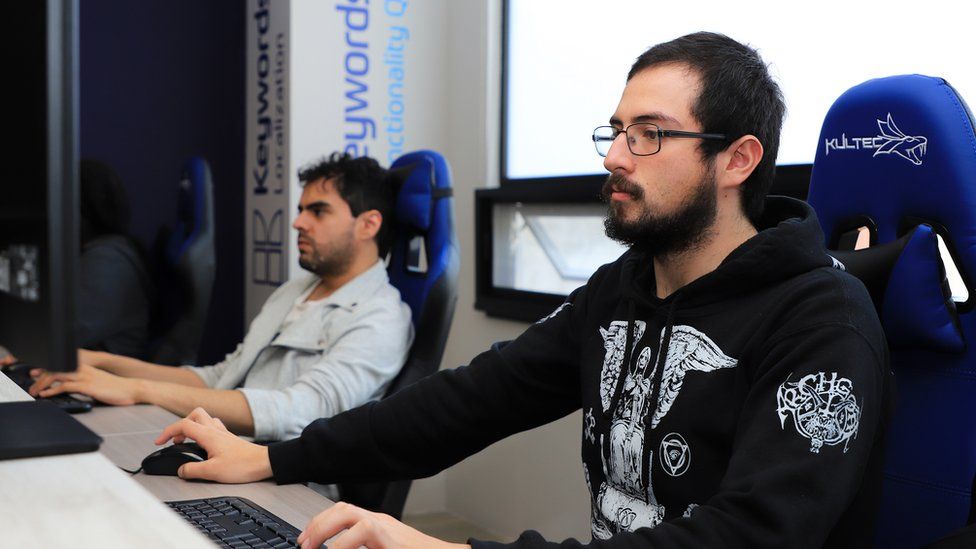
Keywords has staff around the world, including at its office in Mexico City, pictured
In addition, Keywords offers a testing service for nearly completed games, to check that they work correctly. And it has an audio business whereby actors – famous or not so famous – provide a game’s voices and dialogue, and it adds all the music and sound effects.
Further, the company is the world’s largest provider of games translation services – converting games into 50-plus languages.
Then after a game has been released, Keywords has staff who offer customer support under a client’s name. So if you phone a gaming company demanding help to get you to the next level, you may actually be put through to Keywords employees.
It is a big operation for Andrew to lead, and while coronavirus has temporarily clipped his wings, he typically spends “half my time” travelling around the world.
It is a far cry from Keywords’ humble beginnings in 1998, when a friend of Andrew’s, Giorgio Guastalla, set up a small firm in Dublin offering translation services to business software providers. It grew slowly until Andrew was asked to join and lead the company in 2009, by which time it was solely operating in the gaming sector.
Keywords has been helped by the growing popularity of computer games
“He had been asking me for a number of years, he thought I could really grow and make something of the business,” says Andrew. “At the time it was just 50 people in an office in Dublin.”
Andrew was born and raised in South Africa. He and his family moved to the UK when he was 16, settling close to London. After gaining a management degree from Bradford University, he then had a varied career in business.
He started working for cigarette firm Rothmans, before moving into mergers and acquisitions in a number of industries, and then finally specialising in the technology sphere.
Andrew’s plan for Keywords was big expansion, helped by using his knowledge of organising takeovers to buy firms, which would allow the business to expand the services it could offer gaming companies. His joining the business also happily coincided with the huge growth in popularity of computer games over the last decade.
Andrew hopes that Keywords will become a €1bn business
“It has been a rare example of spotting an opportunity, having that vision, then creating a business plan and following it religiously,” says Andrew.
Technology sector analyst Patrick O’Donnell of Irish stockbrokerage Goodbody, says, “Andrew Day has been critical for Keywords.
“Keywords has completed over 40 acquisitions under Andrew’s leadership, and is now clients to 23 of the top 25 global video gaming publishers, and all top 10 mobile game developers,” he says.
These companies all use Keywords because it is cheaper and more convenient for them to give it work to do it rather than employ vastly more staff in-house. “We get projects to do,” says Andrew. “So if the gaming firms did this work in-house, at the end of a certain project they could have staff just sitting around.”
He is, however, still wary of playing the games himself. “I find it hard to put a game down. I want to complete it, to move to the next level. Or if I’m playing the same level over and over again I want to do it faster, or jump higher, or catch more coins. It appeals to my personality rather sadly.”
Fast-growing crypto-currency assets could pose a danger to the established financial system, a senior Bank of England official has told the BBC.
Although not much of UK households’ wealth is currently held in assets such as Bitcoin, they are becoming more mainstream, said deputy Bank governor Sir Jon Cunliffe.
If their value fell sharply, it could have a knock-on effect, he said.
The Bank needed to be ready to contain those risks, he added.
Speaking to the BBC’s Today programme, Sir Jon said that at present, about 0.1% of UK households’ wealth was in crypto-currencies.
About 2.3 million people were estimated to hold them, with an average amount per person of about £300.
However, he stressed that crypto-currencies had been “growing very fast”, with people such as fund managers wanting to know whether they should hold part of their portfolios in crypto-currencies.
“Their price can vary quite considerably and they could theoretically or practically drop to zero,” he said.
“The point, I think, at which one worries is when it becomes integrated into the financial system, when a big price correction could really affect other markets and affect established financial market players.
“It’s not there yet, but it takes time to design standards and regulations.”
He added: “We really need to roll our sleeves up and get on with it, so that by the time this becomes a much bigger issue, we’ve actually got the regulatory framework to contain the risks.”
Sir Jon was speaking the day after the Bank published its latest Financial Stability Report, which examined the health of the UK’s financial system.
The report said UK households had remained “resilient” despite the end of the furlough scheme and other Covid support measures.
However, it added that uncertainty over health risks and the economic outlook remained.
Covid could still have “a greater impact” on the economy, especially in light of new variants, it said.
The report comes as Bank policymakers prepare to announce their next interest rate decision on Thursday.
The cost of living rose by 4.2% in October, its highest rate in almost 10 years. This surge in inflation has led analysts to predict an increase in interest rates from their current record low of 0.1%. But doubts have recently set in because of the spread of the Omicron variant.
Bank of England governor Andrew Bailey previously said he was “very sorry” over the rising cost of living
“The UK and global economies have continued to recover from the effects of the pandemic. But uncertainty over risks to public health and the economic outlook remains,” said the Bank.
“For example, there are near-term pressures on supply and inflation, and there could be a greater impact from Covid on activity, especially given uncertainties about whether new variants of the virus reduce vaccine efficacy.”
The Bank of England’s financial stability committee said the risks to the financial system had returned to their levels before the pandemic began.
“Major UK banks are strong enough to keep supporting households and businesses, even in severe scenarios,” the Bank said.
It is consulting on lifting emergency measures introduced to give banks more room for manoeuvre at the start of last year.
Banks will now once again have to build up an extra buffer of capital to guard against future shocks, worth 1% of all their loans (known as a counter-cyclical capital buffer). That will rise to 2% next year.
The Bank is also consulting on loosening affordability limits on mortgages.
It is examining whether to drop a requirement that lenders should test whether borrowers could still afford repayments if interest rates rose by 3% above the standard variable rate.
It added in its report that getting funds together for a deposit is still the most significant barrier to home-ownership.
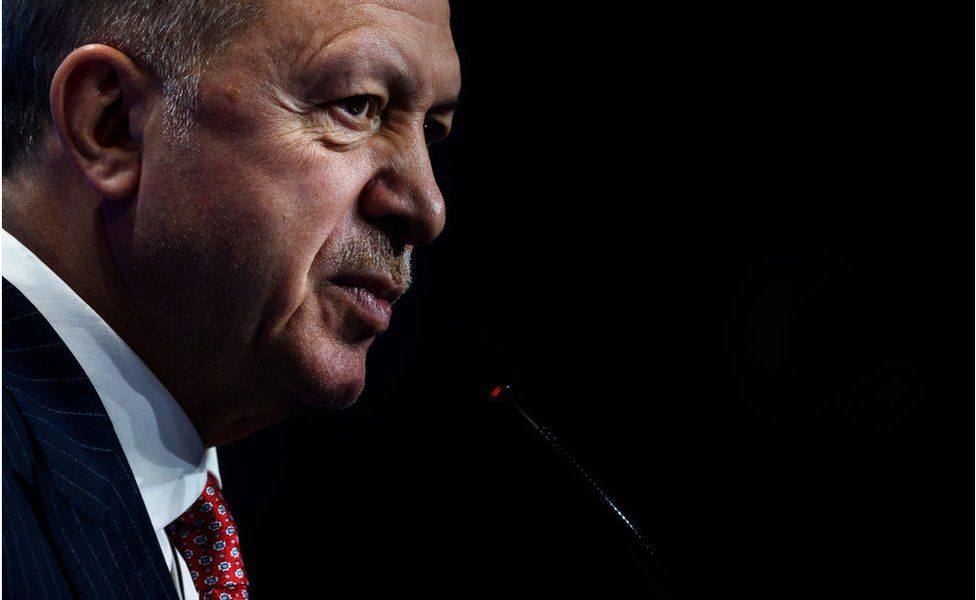
The Turkish lira has fallen to a new record low amid fears that the central bank will make a further cut in interest rates later this week.
President Tayyip Erdogan built his reputation on strenghening Turkey’s economy
At one point, it was down nearly 7% at just under 15 to the dollar, but it recovered slightly after the bank intervened in the market to prop it up.
The currency is now worth about half its value at the beginning of the year.
President Recep Tayyip Erdogan has pushed the central bank to keep cutting rates despite surging inflation.
Economists surveyed by Reuters expect the Turkish central bank to reduce its main interest rate from 15% to 14% on Thursday. It would be the fourth such cut in as many months.
The president and his allies argue that lower interest rates will boost Turkish exports, investment and jobs. But many economists say the rate cuts are reckless.
Last month, the country’s inflation rate hit 21.7%.
The BBC’s Victoria Craig in Istanbul says taxi drivers, food sellers and hotel patrons have all expressed surprise and anger as they see the value of the money in their pockets drop by the day.
Normally, central banks raise rates to combat rising prices, but Mr Erdogan has called such tools “the mother and father of all evil”.
Although the bank has attempted to bolster the value of the lira by using its dollar reserves to buy the currency, analysts say it does not have enough firepower to stop the slide.
“We doubt that either intervention or a balanced current account will be effective in stabilising the currency,” said investment bank Morgan Stanley in a note.
It added that the central bank’s relatively thin reserves meant interventions could turn out to be counter-productive.
The BBC’s weekly The Boss series profiles different business leaders from around the world. This week we speak to Kimberlee Perry, founder of trampoline fitness company Bounce.
“You need to connect with other people, it makes you feel good,” says Kimberlee Perry.
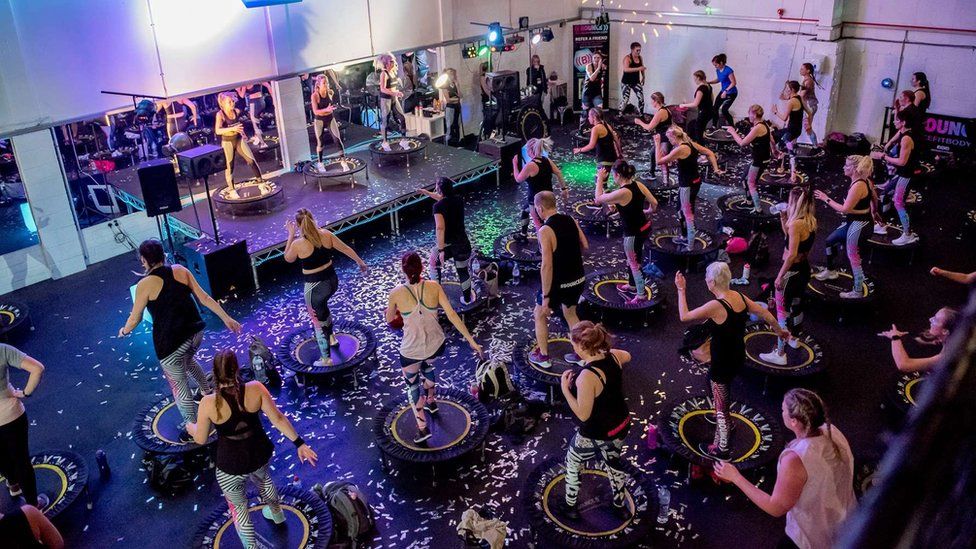
Before coronavirus hit, her business had never contemplated running virtual sessions. The whole purpose of its dance classes on trampolines was to physically bring people together, especially new mothers who felt alienated in small towns.
This is what inspired Kimberlee, 35, who is originally from Australia, to start up Bounce six years ago. In 2014, she was on maternity leave, and moved with her husband 30 miles out of London to the Essex town of Harlow. Suffering from postnatal depression she felt lonely.
“All my life I’d really invested in sport, and used it to connect with people,” she says. “It’s a very sporty culture in Australia, so when I originally came to London when I was 18, I joined a netball club to make friends.
“When I moved to Harlow I felt very alienated, I barely knew anyone, and the only sort of clubs I could join were mother and baby ones,” she says.
The company’s customers are predominantly women
Kimberlee found there were no fitness classes where she could take her baby, despite the positive impact exercise has on the mental and physical wellbeing of new mothers. So she decided to set up her own, investing £200 to launch Bounce later that year.
“I wanted to feel good about myself – as a new mum you spend hours, most of the day and night on your own. So Bounce became a fusion of everything I needed in my life at the time – fitness, connections and fun.”
Fast forward to before the start of the coronavirus pandemic, and the company had grown to have 47,000 monthly customers – mostly women – across the UK, Australia and New Zealand.
Another factor behind her setting up the business was that she had missed out on a promotion – which she felt was rightly hers – in her previous job working as a sales manager in the events industry.
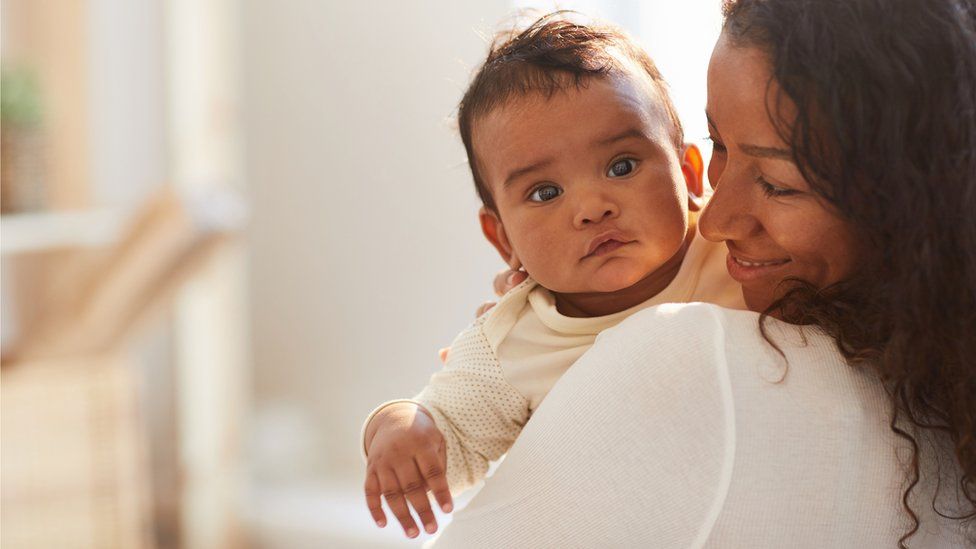
Kimberlee wanted mums to be able to go to exercise classes, and be able to take their babies with them
“Climbing the ladder in my job was a massive priority for me,” she says looking back. “Being in the events industry is tough – you have to be working 24/7 – and I think that my pregnancy contributed to the decision not to take me on for that promotion.
“I was devastated, I spent a few days in bed crying over it, trying to work out what my identity was without this job.”
Kimberlee already had a dance background, and started working hard at quickly getting some fitness instruction qualifications. Soon she was teaching classes at a local gym, where she came up with the specific idea for Bounce.
“I came across these rebounders, which are mini trampolines, and I said to my husband, ‘I’m going to take £200 out of the joint account and buy eight of them,'” she says. “I think he thought I was mad.
“But they’re well known for their low-impact nature, they’re easy on the joints, and absorb over 80% [of impacts] – so I knew they would be perfect for new mums who wanted to work out.”
Kimberlee’s firm has now trained more than 700 instructors
To launch her first classes, Kimberlee choreographed a number of dance-based routines, and hired a local community hall in Harlow.
“Mums would bring their babies and leave them in their prams while they did the class,” she says. “After a few months I started to put on more classes because of demand – people loved the fun nature of the class, and the fact that they could burn around 600 calories in 45 minutes.
“I put all the money back into the business – paying my hire fees for the hall, then buying more trampolines. But it got to the point where I couldn’t teach all the classes myself – I was doing 12 a week and the weight was falling off me.”
Hiring other instructors, Kimberlee’s classes started to get more and more attention – and competitors began to set up similar ones. She knew she wanted to expand the business and protect her idea, so decided to look into franchising.
But Kimberlee is the first to admit that she wasn’t sure how the process even worked. “I didn’t have any understanding of it, but I knew I needed legal protection to support my business idea,” she says.
“So when a lawyer helped explain the franchise model and the possibilities of how big I could take the company, it was so enlightening.”
Bounce expanded to Australia, Kimberlee’s homeland, in 2017
To date, Kimberlee and her team have trained more than 700 instructors, and now have 320 franchise studios in the UK and 20 abroad. Their franchisees pay an upfront fee to be part of Bounce, which gives them access to the equipment, and a protected geographic area to operate in.
Franchisees then pay a percentage of their revenues as an ongoing management fee. For this fee they get their business admin managed, all the class routines and choreography, plus branding and marketing.
Marc Mullen, a London-based personal trainer, believes Bounce is popular because it is fun and friendly, and offers its predominantly female customers a sense of community.
“Joining a regular gym can be very intimidating for some women, as unfortunately they can be male-dominated environments,” he says. “And there are high rates of gym dropouts due to the fact that people don’t really have a structure to follow, lack of ideas, or motivation.
“[By contrast] Bounce keeps people engaged with that sense of community. The workouts have a fun element to them, they are high energy, and with the creation of the franchise it’s become accessible to more people around the world.”
With the business enjoying an annual turnover of £3m last year, Kimberlee now oversees a management team of 25 at its Harlow headquarters.
However, the chief executive hasn’t forgotten her roots. “I still teach – five classes a week, and make up every routine,” she says. “I love how it makes me feel, and knowing that I’m inspiring other women every day… that’s a feeling you can’t really beat.”
In April, in response to Covid-19, the company moved its classes online, offering eight per day, seven days a week.
“Franchisees had to shut down their studios, but everyone benefited from us going virtual. We split the profit from the online classes between the franchisees, which was hugely helpful to them,” Kimberlee says.
But with gyms now reopening, she adds that everyone at Bounce is excited to once again meet their customers in person.
Lucy Hitchcock, founder of Partner in Wine, launched her business during the Covid lockdown.
Two years on, she’s on track for an annual turnover of a quarter of a million. She shares how a viral video and social media helped put her products on the map, for CEO Secrets BBC News series.